Stohrer Music

Latest

The most recent posts, news, articles, and galleries — all in one place.

Article · March 26, 2015

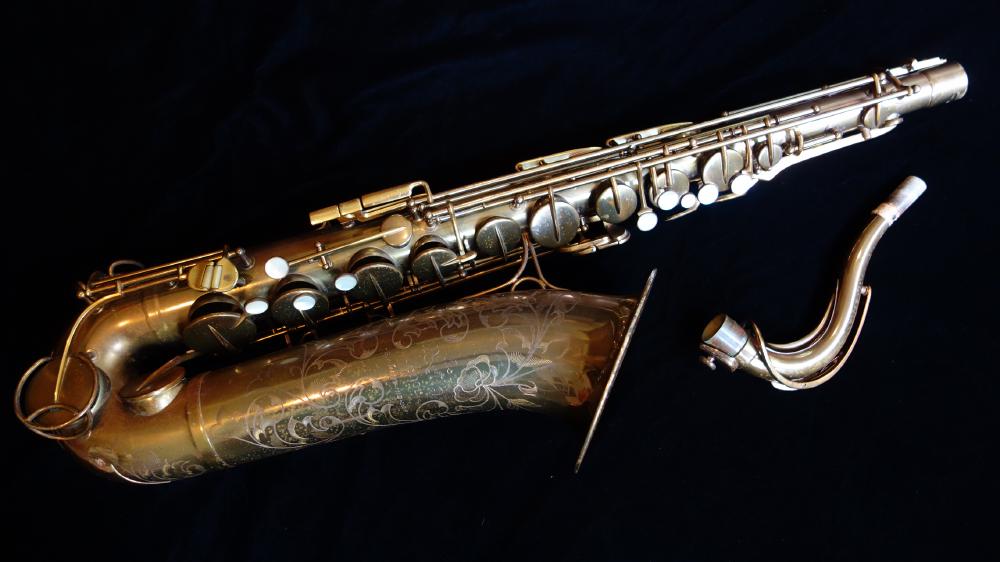
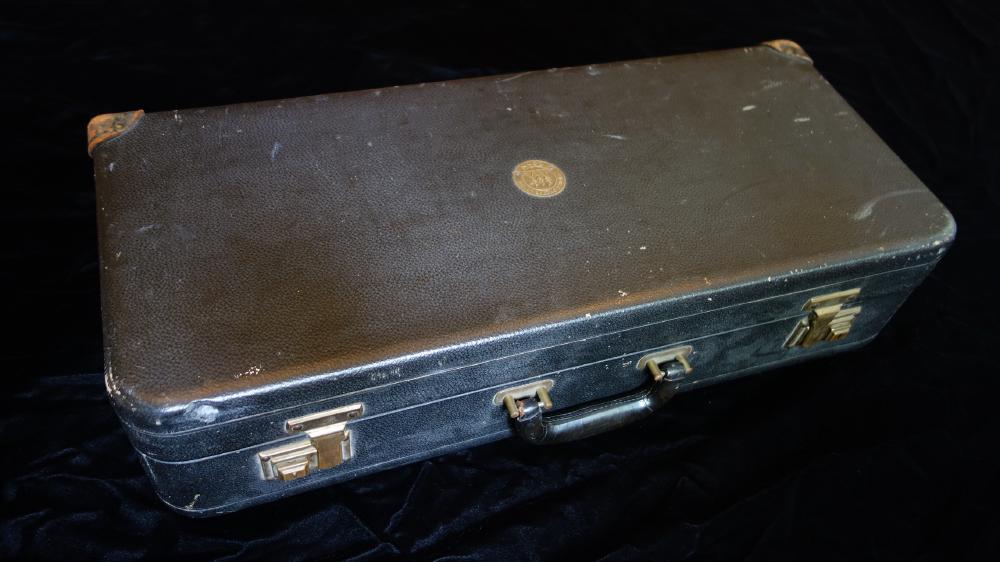
SML Gold Medal II Stencil Tenor Saxophone, Never Played

I am very lucky to work on quite a few extremely clean and good condition horns, including perhaps a dozen or so a year that are still wearing their original pads. Given that most of what the repairer of a vintage saxophone is dealing with is the effects and ravages of time, wear and tear, and (I’m sorry to say it) the big one: past repairs, it is quite nice to work on a horn where I am closer to the factory intent from the start. But even in my strange corner of the saxophone world it is worthy of note when I get to work on a horn that is truly New Old Stock- that is, a horn that was never sold in the first place.
Article · March 26, 2015

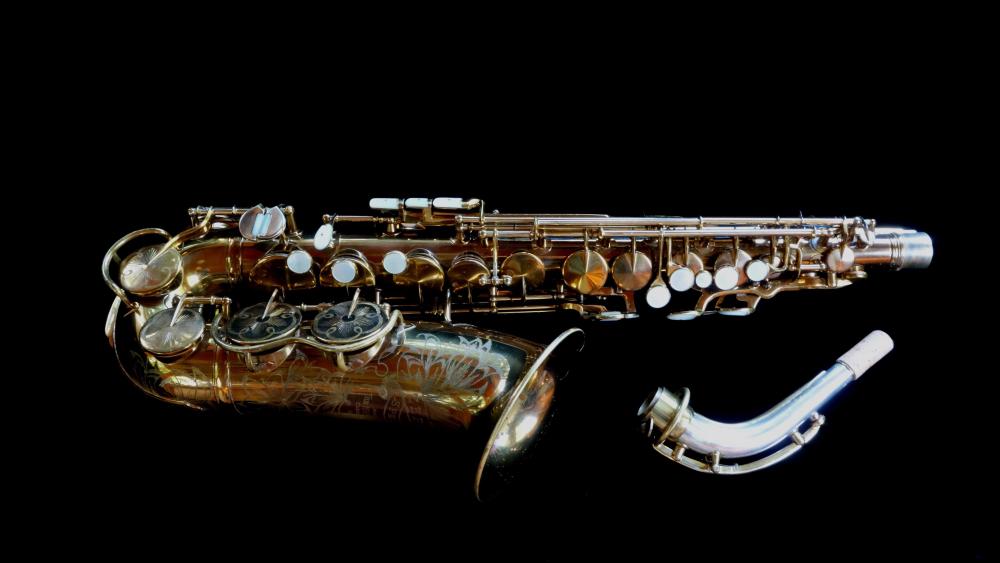
Selmer Radio Improved Baritone Saxophone (After)

So this horn ended up being quite challenging and quite rewarding. It was an awful lot of work, but at the end of it all, out came a truly excellent playing baritone. The action was light and fast and easy, the intonation was pretty good, the tone was excellent and the horn was a lot of fun to play. On any horn this is a good result- especially a baritone pushing 80 years old, but on a saxophone of this level of rarity (less than two dozen of this type were ever made), it was quite a rush to put a mouthpiece on it and be greeted with not only a work of art but just a damn great horn.
News · March 13, 2015

Stohrer Music News, Relocation Edition

Short version: We’ve moved! Still living just outside Durham, NC. Long version: We made it! The old place, 24 hours before the movers were supposed to show up. This might not be a big deal up in Boston, but here in North Carolina this might as well be four feet of snow. Everything was shut down.
Article · February 21, 2015

Selmer "Radio Improved" *Transitional* Baritone Full Overhaul - Before

This is going to be a big job! Although this horn is fairly clean physically, there are a few major trouble spots that will provide me with some difficult challenges. There are probably less of these horns in existence than I could count on two hands, so I’m pretty excited to work on it. I’ve been asked to try to avoid any soldering work- including unsoldering the upper bow, which would make the major dentwork necessary in that area a lot easier- so this will be quite a challenge. I also expect an awful lot of rusted out and stuck screws, rollers, springs… now that I think of it, there are a lot of pitfalls in this job, and its probably rather foolhardy of me to post “before” pictures publicly before I get through the unseen gremlins and hit bedrock. Ah well, further incentive to not **** it up.
Article · February 21, 2015

338xxx King Super 20 Alto Repad

This was one of those jobs where everything went my way. There is an awful lot in the job of saxophone repair- and probably any job that requires working with aged mechanisms and variable materials- where a certain amount of it just depends on which way the wind blows. You could get a pad seated perfectly on the first try, or you could just as easily need to try 3 different pads and spend an hour before it came out right. Sometimes you can get an octave mechanism sorted out in an hour, sometimes it takes all morning.
Article · February 20, 2015

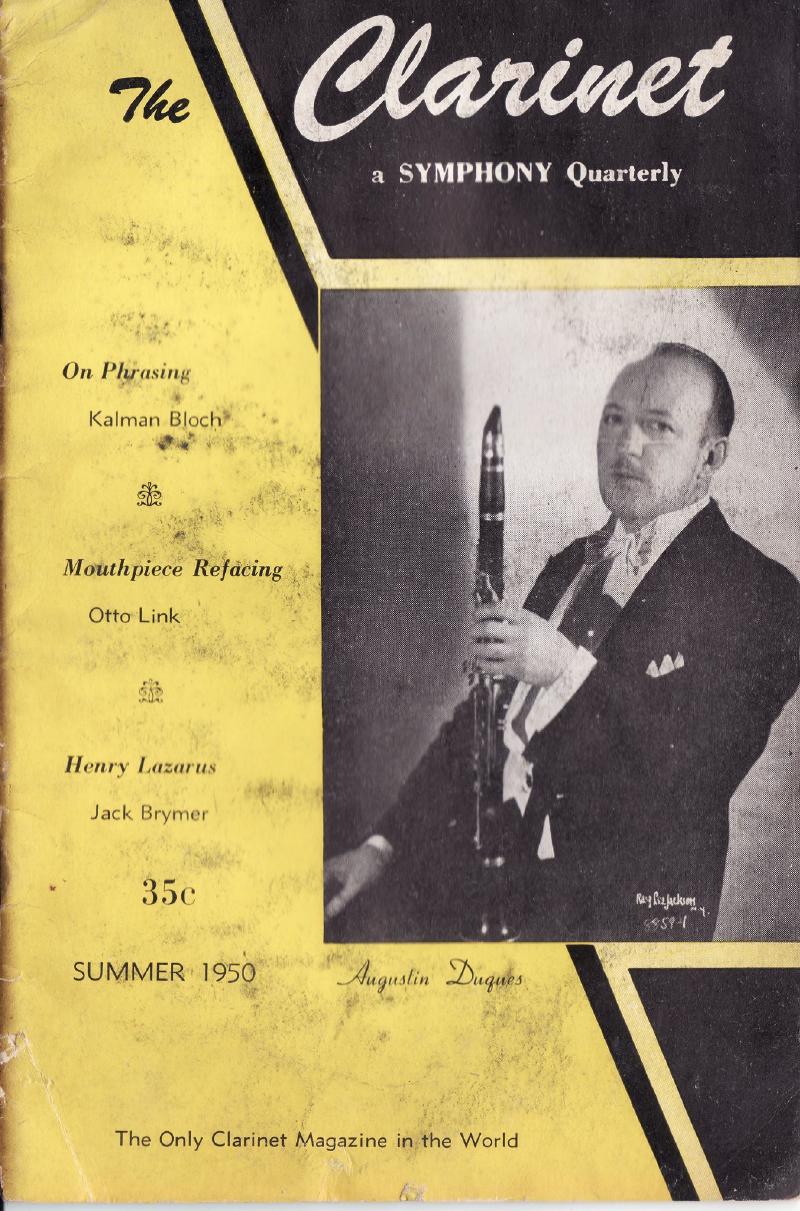
Otto Link (The Man Himself) Refacing Article, 1950

This is a short article from the summer 1950 edition of “The Clarinet”, featuring the actual Otto Link talking about his refacing process. I have an old Otto Link ad for refacing services published at about the same time- the cost to reface a mouthpiece was $3. Of course, “refacing” in this sense is just plugging a mouthpiece into the Link facing machine, rather than the hand-finishing and repair that we think of today as refacing, but still- $3 to put an actual vintage Link facing on a piece isn’t bad!
News · December 2, 2014

Stohrer Music News, December 2014

Black Friday madness here at Stohrer Music Stohrer Music News, December 2014 Thanks for stopping by! A few things of note are going on around here: 1. I installed a wood stove in my Airstream workshop (see the smoke in the photo above? Wood heat!) and its keeping me nice and warm this winter for just about zero cost since we live in the woods. Yep, that’s my workshop. I’ll update the gallery page soon with photos from the wood stove installation. I’m pretty pumped about it, because going on electric heat last year was both expensive and on the coldest days insufficient! Yes, I have a carbon monoxide detector, and since travel trailers like my workshop are naturally drafty (airtight trailer will kill you), my reading is steady at zero, so don’t worry about me! Just be glad I’m going to be warm this winter, unlike the last.
Article · September 7, 2014

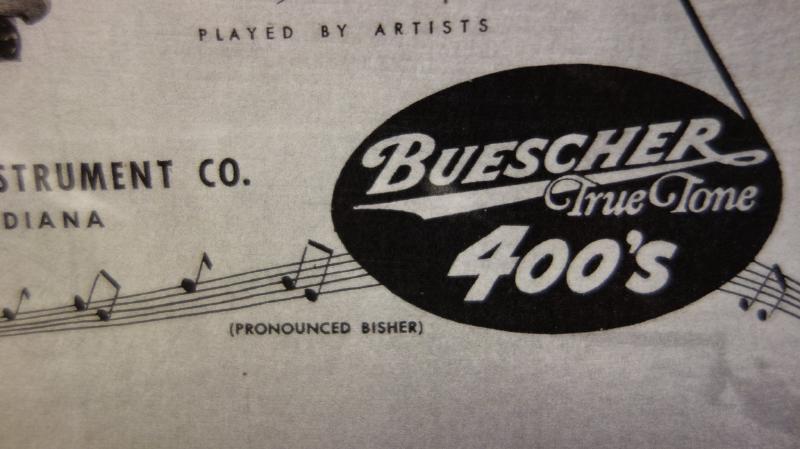
How To Say "Buescher"

How to pronounce the name of the Buescher Band Instrument Company (named after the founder, Gus Buescher) is something that comes up frequently among folks such as myself- saxophone geeks who also like to get things right- and while the story is a little complex, there is what I think is a “right” way to say it. I happen to have a Buescher ad from the 1940s hanging on the wall above my workbench. Read what it says:
Article · July 31, 2014

A 3-D Printed Saxophone

Olaf Diegal, a professor of product development at the Lund Universty, has created a partially playable saxophone through additive manufacturing- also known as 3-D printing. Read my short commentary below. While I think this is quite promising and I am zero percent surprised having followed 3D printing for a while now (note that article is from 2010), I also think that it will be a good long while before a proof-of-concept level saxophone becomes a good saxophone. The maker here says that his second try will be “near perfect” which I think is a bit of an overstatement. Still, kudos to the guy for doing something quite difficult and having the passion to do something like this for free and share it with the world.
Article · July 29, 2014

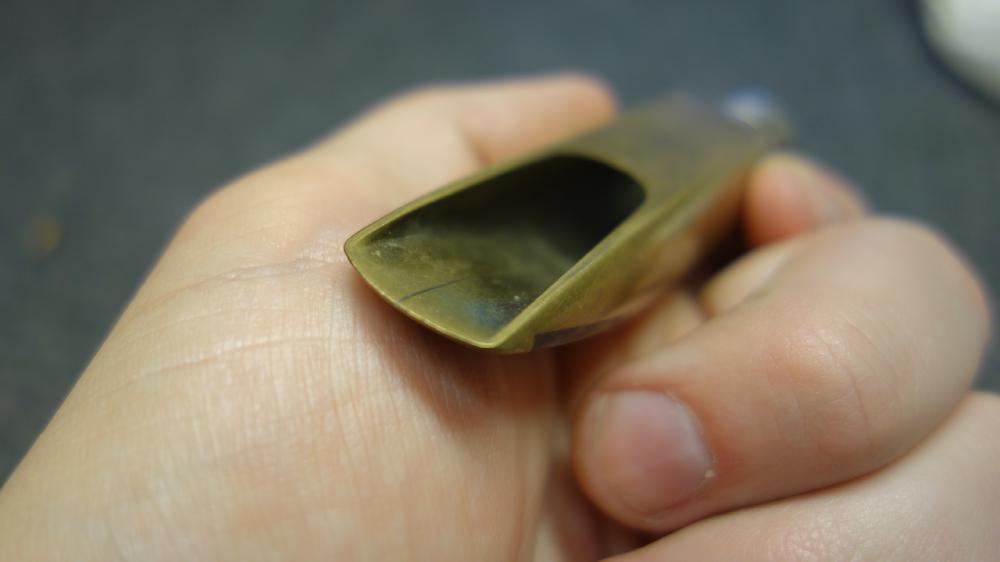
A Really Nice Tenor Saxophone Mouthpiece Facing

One of the less common things to see around is a nice mouthpiece facing, freely given. Perhaps this is because refacing is not something you should try lightly (and if you do, prepare to ruin a lot of mouthpieces until you get good at it), or perhaps because the facing curve is not so well understood. Even though a purely mathematical curve can be applied with reasonable success, I have never found a better method for my amateur status as a refacer than finding mouthpieces I love and writing down the facings- and often, these facings don’t fit a pure mathematical curve, so either I like imperfect facings or imperfect facings aren’t so imperfect. This particular mouthpiece is my hands-down favorite 7 facing, and the one I try to emulate whenever I put a 7 tip on a tenor mouthpiece. So if you are a refacer, or if you would simply like to try your hand at the craft (again- tread lightly and don’t work on anything valuable unless you are either a professional or a world-class A-hole and don’t mind permanently ruining something that would otherwise last until next century) here is a really great tenor 7 facing.
Article · June 27, 2014

Martin Committee III (aka "The Martin") Tenor Saxophone

SOLD This is an exceptionally fine original condition Martin Committee III aka “The Martin” tenor saxophone made in 1946, which currently wears its original pads and is in line for a full overhaul with flat metal resonators. The original lacquer is about as perfect as you see on these older Martins (which have notoriously delicate lacquer) and there is even some lacquer overspray remaining on the pearls, indicating that this horn was barely played. You can look for a long while for a more physically clean Martin tenor from the golden era, but I’m not sure you’d find one. This is a beautiful survivor of a bygone era, ready to make music again after a long sleep. Think of owning a saxophone like this one this way: someone like you will be playing this horn in 100 years, and someone like me will be overhauling it.
Article · June 27, 2014

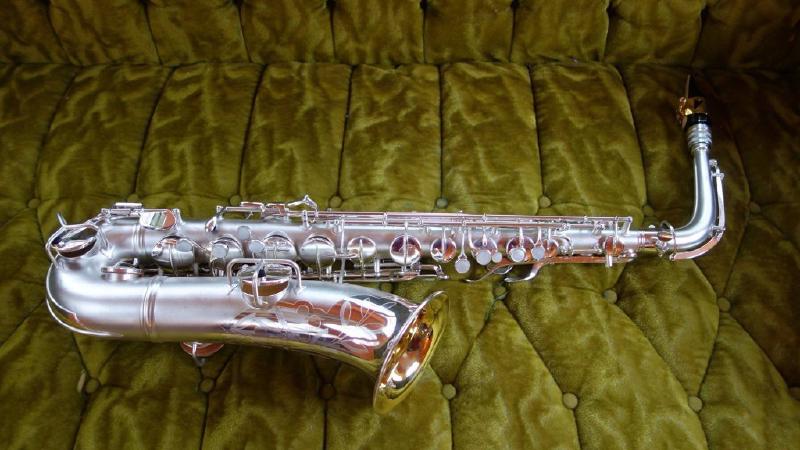
Conn 6M Transitional Alto Saxophone w/ Overslung New York Neck

SOLD This is a freshly overhauled Conn 6M transitional alto saxophone from 1934 with the “New York” neck. This saxophone is in nearly flawless condition and comes with its original case, mouthpiece, ligature, mouthpiece cap, and Conn pad measuring tool. As a result of the excellent work on the part of the Conn designers and a fresh full mechanical rebuild, the action is quick, quiet, and tight and the horn is extremely responsive and easy to play. The tone is warm and slightly focused (though not as focused as the later 6Ms), and it plays very well in-tune while retaining much of the power of the previous Conn model, the New Wonder Series II (aka “Chu Berry”) while being a massive improvement in build quality, ergonomics, and intonation.
Article · June 14, 2014

How I Polish Silver Saxophones

Conn 8M C-Melody with “Naked Lady” engraving, overhauled by me. One of the more common questions I get from someone who has recently browsed my galleries and horns for sale is “How do you polish silver?” or sometimes “How can I polish my saxophone to make it look like yours?” Well you can’t polish it like I do without a full disassembly and removal of all corks, felts, and pads. So my way can’t be done outside of an overhaul, but hopefully you will find this instructive and helpful whether you aim to do it yourself or whether you just want to be more informed about the process.
Article · April 27, 2014

A King Feast

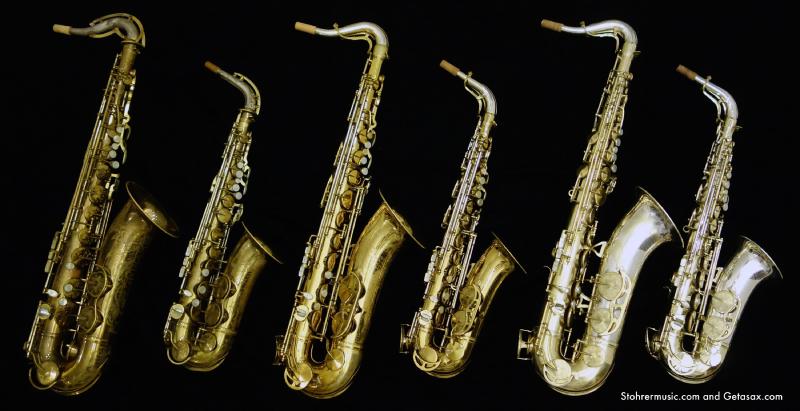
I am lucky enough to live down the street from Brian from GetASax.com, and every once in a while we find that between the two of us we are in temporary possession of an unusually full grouping of a particular type of saxophone. Last time, it was a Conn night. This time, it was Kings. Between the two of us (mostly him, but I did have the tenor Zephyr Special which he didn’t have one of) we had enough Zephyr Specials and Super 20s and even a Saxello to cover the soprano part, and even a Powell Silver Eagle, which is based on the Super 20 to take some rather amazing photos, if you are into this sort of thing. Enjoy!
Article · March 14, 2014

On Learning A Craft

Last night I was reading through my “new” Woodwind Quarterly magazines that I bought just a few days ago in a nearly complete collection from another repairman. These are old, repair-centered periodicals that were published for a brief time in the 1990s until 2001. Very geeky, extremely interesting, and packed with amazing knowledge. I’ve never read them before, and I am finding them fascinating reading. I also happened to be reading at night during a power outage, so I was reading in silence by oil lamp.
Article · February 23, 2014

Crossroads of Saxophone Craftsmanship

Yesterday evening, I found out that the Powell Silver Eagle project had been “suspended”. The Powell Silver Eagle was a made-in-America high-end saxophone being built by a partnership between E. K. Blessing (based in Elkhart) and Powell Flutes. To reduce this partnership to extreme basics, you have lots of money (Powell) combined with know-how and tooling (Blessing) doing their best to make a handmade high-end saxophone in the United States. Hype was good, reaction of those who played the prototypes was good, and to those of us on the outside the forecast seemed sunny.
Article · January 2, 2014

Understanding Saxophone Key Fitting: Hinge Tube and Post Facing

A large part of the mechanical rebuild service I provide is invisible to the end user. The result of the job can easily be felt by the player, but the actual mechanical work that is done is literally out of sight, though key fit has repercussions for the adjustment materials that can be used, the pads that can be used, the seal of the pads, and more- and it is the type of work that can only be done during a full overhaul. For a little primer on why key fit can have such far reaching effects, watch this video here.
Article · September 12, 2013

Lacquer Overspray on Original Lacquer Selmer Saxophones

On Selmer saxophones of certain vintages, the last coat of lacquer was applied after the horn was complete including padwork. They would cork the keys shut and apply the last coat, which resulted in the pad leather outside of the tonehole having a very light coat of lacquer. I’m not certain when exactly this started or stopped, but I have seen it from Balanced Action through Mark VI, maybe a Mark VII. Its only meaning is that it is an additional way to sometimes tell if a Selmer has its original pads.
Article · August 10, 2013

Why Overhaul A Saxophone?

One of the recurring questions I get is a variation on “Should I overhaul my horn?”. This question- almost without exception- comes from players who have never gotten a horn overhauled, and don’t understand why they should put a relatively large amount of money into an overhaul vs. just take it into the shop for $50-100 worth of work every few months. The fact that I only get this question from people who have not experienced a good overhaul should tell you something- as should the fact that I get this question often! A saxophone overhaul is one of those things that once you do it (and its done well) it makes sense- and often you can’t imagine ever going back to playing horns that are less than perfectly set up. But there is precious little information on WHY exactly an overhaul is a good thing, and its a pretty big leap of faith to take the first time. But a full overhaul is often not only cheaper in the long run but better for your playing, and here is why.