Stohrer Music

Latest

The most recent posts, news, articles, and galleries — all in one place.

Article · December 8, 2015

Crowdfunded Content Blitz

In August 2015, I took a flyer and put up a crowdfunding campaign to buy me some time off regular (paying) work to spend some time working on the content that I am making for this website- videos, articles, etc. It went better than I expected, and I am spending about half of the month of December working solely on my educational content here and on YouTube- and of course the YouTube content will be used here.
Article · December 4, 2015

Tools: Level Two

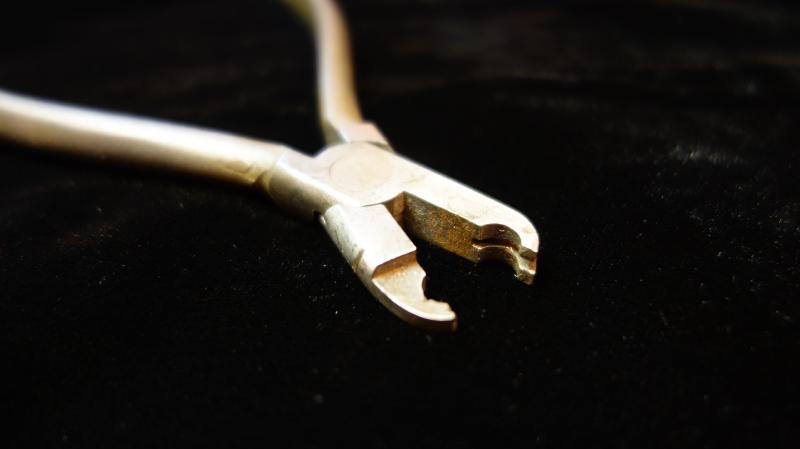
Tools: Level 2 Basic overhaul of your own saxophone (minor mechanical work) These are the tools (in addition to all of the tools and supplies from Level One) that you can expect to use if you are going to perform a disassembly, cleaning, and full repad/basic overhaul of your own saxophone(s). The cost represented here is about $2000-4000, depending on how complete you make your set (one parallel plier vs. a selection of 5 different ones, for instance), bringing the total investment so far including level 1 tools to over $3000 at a minimum.
Article · December 4, 2015

Build A Saxophone Repair Workbench

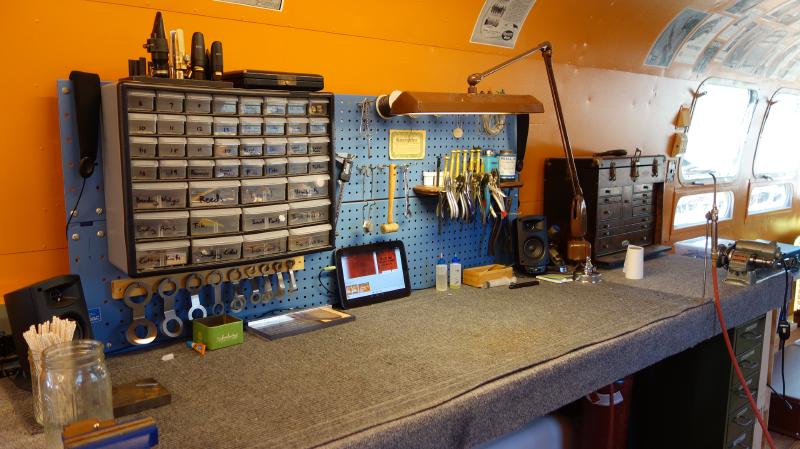
Your work area is the literal foundation for your saxophone repair, and as such it needs to be stable, level, sturdy, and clean. It can be simple or complex, but it must always be well thought-out. Remember that your work will reflect its origins. The following are my recommendations based on my experiences, obviously you must find the best way to work for you. There are no specific dimensions or step-by-step instructions here, only recommendations and tips to figure out your own customized needs so that YOU can make the dimensions. Because honestly if you can’t build the underlying bench itself- which is quite simple- without instructions, you probably can’t figure out what is going to lay on top of it when you are done.
Article · December 4, 2015

Tools: Level One

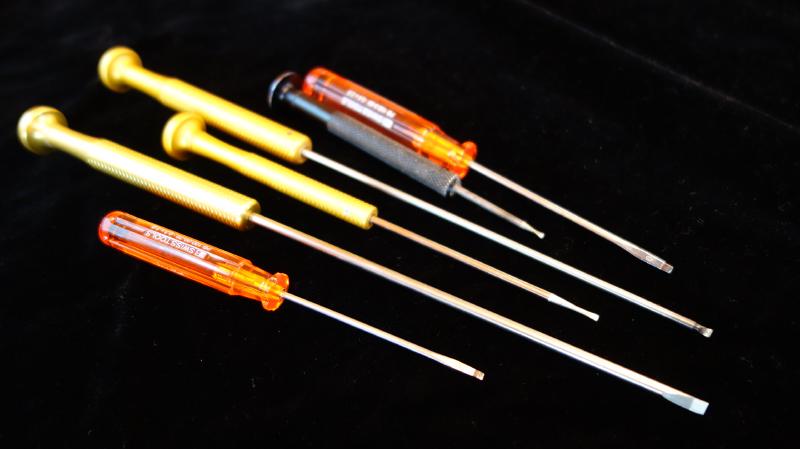
Tools: Level One # Learning to Do It Yourself Regular Maintenance and Minor Repairs On Your Own Saxophone Before using the information presented here, please read this. These are the basic tools you will want to do maintenance and minor repairs on a saxophone between major servicings as detailed in the Level 1 Guides. Of course, nobody ever complained they had too many tools, so consider this list as a basis for later expansion.
Article · November 28, 2015

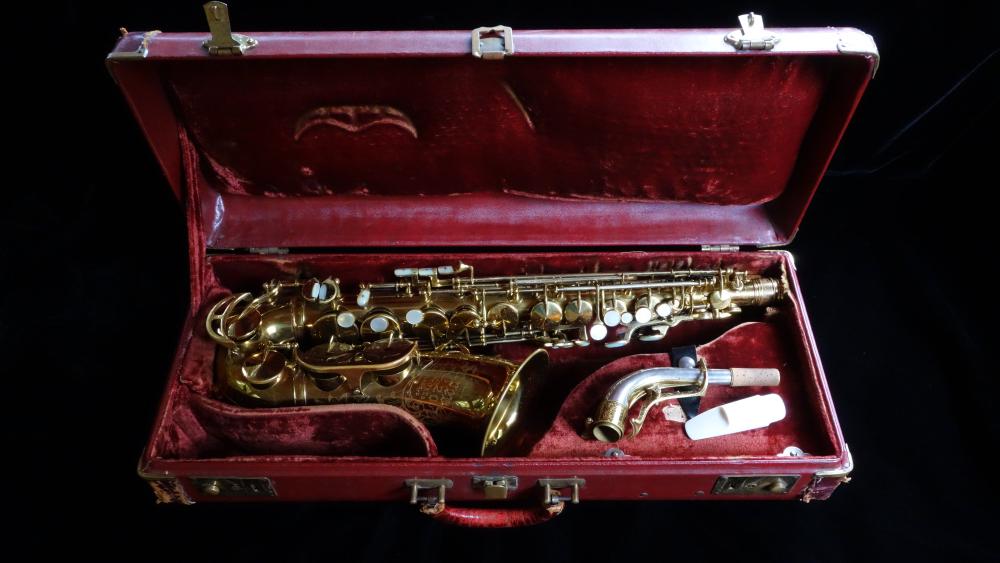
King Super 20 Alto Saxophone, Full Pearls

SOLD This is a 1950 King Super 20 alto saxophone in original lacquer with its original case, currently undergoing a full mechanical rebuild by me. It is in very good physical condition, and the particular variety of this horn can be classified either as a “Series 1A” or a “Series I transitional”, with the very first of the “modern” style left hand pinky table, which in my opinion was the best mechanical design of the “modern” style left hand pinky table that King made with the Super 20. This horn has a slightly darker sound than the later Super 20s, but still very punchy and round with plenty of that King zing that makes these horns famous.
Article · November 28, 2015

Selmer "Dorsey Model" Alto Saxophone

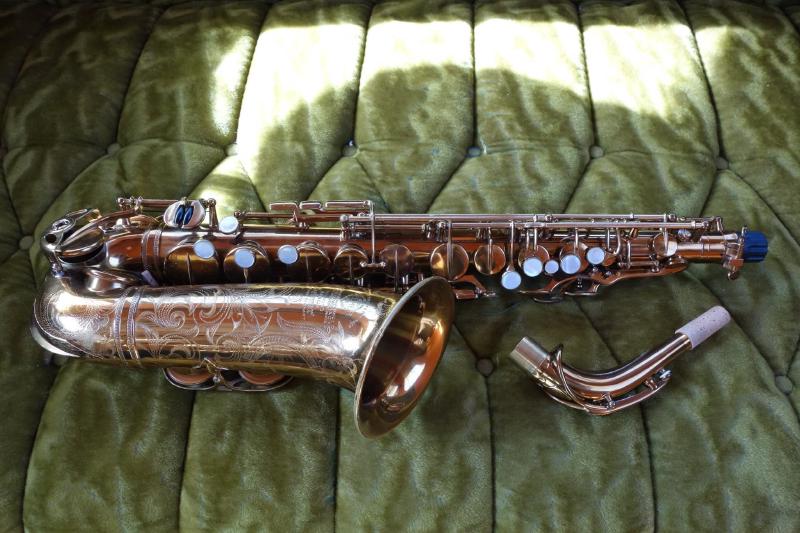
Well here is a horn you don’t see every day. This is a Selmer “Dorsey Model” alto saxophone in what I believe to be a very old factory relacquer- though done extremely well and color-correct so most folks wouldn’t be able to tell, and even a few professionals might be fooled. It also sports its original case, which is just beautiful. The “Dorsey Model” was a special edition, made in extremely low numbers concurrently with the Balanced Action model. The story goes that Jimmy Dorsey liked the feel of the Radio Improved keywork (left hand bell keys and old style left hand pinky table) that they made a special run of horns that are basically Balanced Action body tubes and necks with Radio Improved bells, left hand pinky tables, and bell-to-body braces.
Article · November 28, 2015

Selmer Super Sax "Cigar Cutter" Alto Saxophone, Gold Plate

This is a drop-dead gorgeous example of a Selmer Super Sax made in 1931, wearing its original gold plate. It sports the “cigar cutter” octave mechanism, which to my view is unimportant enough that I forgot to photograph it. What is important is the year and the model- to my mind, the Super is the first Selmer that sounds and feels like a Selmer, and might even be my favorite series of Selmer saxophones. And whether a Selmer Super Sax sports the “cigar cutter” octave mechanism (which is an applied name and not official, merely a nickname based upon a shape in the octave mechanism of the early Supers) or not, a Selmer Super is a great saxophone.
Article · November 11, 2015

Mark VI Tenor: "Player's Horn"

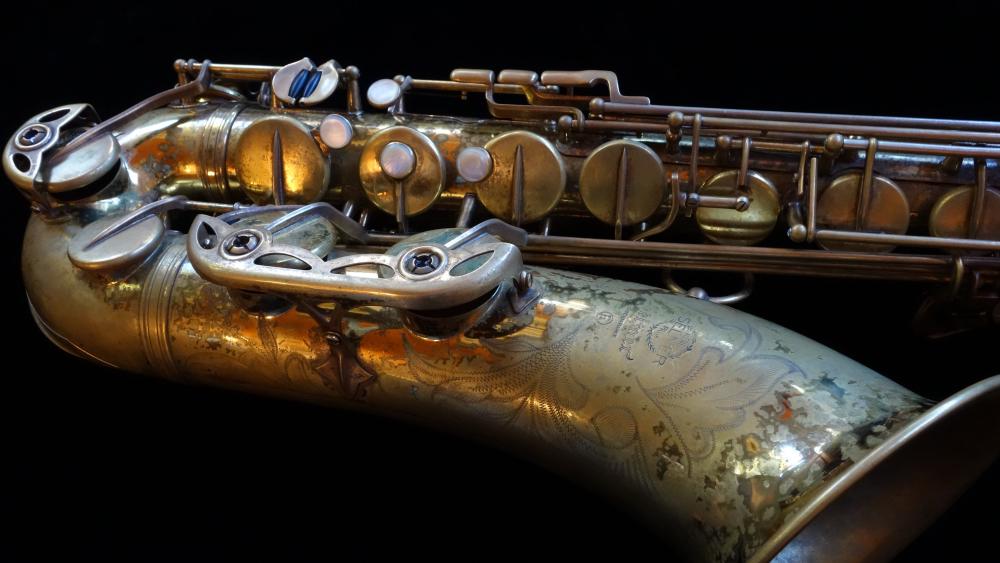
This is a 1968 Selmer Mark VI, which arrived to me extremely worn out and so covered in green corrosion it felt soft to the touch. I often kick myself for not taking “before” photos (I get too excited for disassembly and forget) but this time I really should have. Just to give you an idea, this horn had been played for several hours a day since bought used in 1983 and hadn’t ever gotten a real overhaul- and was never swabbed. It had also recently been dropped. When the owner asked a friend of mine- and saxophone expert- what he should do with it, my friend said “sell it”.
Article · September 15, 2015

1920s Conn Alto and Curved Soprano - Early New Wonder Series II

I think my camera is dying. My trusty Sony RX-100 (first edition) is finally giving up the ghost. Photos have become difficult to focus and seem to lack detail, but a few photos still come through now and then. So I took approximately a billion photographs to bring you a few of this beautiful pair of Jazz-age Conns, both in original finish and both freshly overhauled. (this is also why this section is sparse lately- I need a new camera or to get mine repaired)
News · August 11, 2015

Stohrer Music News, Introspection 2015 Edition

(Edit, December 2015. Waitlist was opened for a while and is now closed again until 2017 at least. That was fast! But since I work slow, it doesn’t take a whole lot to keep me busy. Read on though, because the majority of this post talks about a change in my repair philosophy and how I charge that is important.) Now that I am coming to the end of my waitlist- and therefore, to things agreed-upon with customers up to two years ago- some changes are afoot here at Stohrer Music, and I want to tell you what they are and why I am making them.
Article · July 1, 2015

On The Bench: Selmer Super Action Tenor Saxophone

This is a 1952 Selmer Super (Balanced) Action tenor saxophone in somewhat funny-looking original lacquer, in excellent physical condition; an original un-engraved “Euro horn”. Back when this horn was made, to avoid import taxes for horns sold in the US market, Selmer Paris sent saxophones in parts to Selmer USA (which is an entirely different company, google that to have some fun because they don’t even really like each other at this point) who assembled, engraved, and lacquered them. The engraving patterns that the engravers used in the US and in France were different and thus the original market place is fairly easy to figure. And for some periods in the 1950s and perhaps later, some European market Selmers were entirely un-engraved. I have heard a story that the simple reason behind this is that that the engraver for Selmer in France at the time was periodically ill, and took large swathes of time off, during which saxophones went out the door without any engraving. I do not know the veracity of this statement, but its an interesting idea to ponder and yet another example (if true) of how the lore behind saxophones can be overcomplicated, and serious differences from one horn to the next can have rather pedestrian origin.
Article · July 1, 2015

On The Bench: Yamaha YTS-32 Tenor Saxophone

This is a Yamaha YTS-32, which is basically a Yamaha YTS-52 for the European market. Originally marketed as an intermediate horn, much like the Yamaha YSS-475 intermediate soprano it is actually every bit as professional in playing as its big brother, the 62, with the only notable subtractions to my mind (though there are quite a few differences) being the lack of engraving and plastic key touches rather than genuine pearl. But in playing, this is a really great saxophone.
Article · June 25, 2015

On The Bench: Conn Virtuoso Deluxe Soprano Saxophone

This is a 1926 Conn New Wonder Series II soprano saxophone in the extremely rare finish option known as “Virtuoso Deluxe”. Heavily gold plated and hand burnished, hand-crafted pearl inlay on every key, and elaborate engraving that typically covers the entire horn. On this particular example, there is a dragon-slaying scene (apparently used more than once on Virtuoso Deluxe sopranos of the same era, see here and here) where the dragon and the dragon-slayer are highlighted in silver.
Article · June 19, 2015

On The Bench: King Zephyr Special Tenor

This is an original lacquer King Zephyr Special tenor from 1938. I overhauled it with reusable brass resonators from Tenor Madness, and I am about as pleased with my padwork on this one as I ever get. The horn came out really, really great and it is so beautiful to look at. I learned a tiny bit more about photography (I use a point-and-shoot and make it a point to never edit) and tweaked the aperture settings just to get some photos of the engraving that do it justice. So yeah, sorry about the artsy photos but I just learned how to F-stop and I can’t really control myself.
Article · June 19, 2015

On The Bench: King Zephyr Special Alto w/ Unique Engraving

This is the earliest King Zephyr Special saxophone that I have seen or heard of, and it predates the known serial number lists for the model number by about 7,000 serials. I own a Zephyr Special alto from what seems to be the first big batch of them, a 209xxx instrument. This one is 202xxx, and has several differences from every other Zephyr Special I have seen so far: different engraving for the KING logo, more like what you’d see on a King trumpet of the same era - Eb and C key touchpieces are solid nickel different, larger bow guard more like the bow guard on Zephyr Special tenors hard rubber rather than pearl rollers on the actuating arms for the low Bb/B Other than that, the horn feels and plays the same, which is to say one of the best saxophones ever made. I playtested this one thoroughly :-) and it is nearly identical to my 209xxx horn, with the only differences I felt (mine is ever so slightly more even, this one is slightly more powerful) being easily attributable to them just being different saxophones made on different days and also the differences in resonator choice- mine has flats, this one has slight domes.
Article · May 29, 2015

Now Available to Be Indexed

I had this site set up so that it was not showing up in search engines. I just disabled that, so now that some people might actually see this maybe I’ll get off my butt and add some stuff. I just need to find the time! This site is MAJORLY under construction. Since I worked on it last, how I think this site might eventually work has changed, though the idea and the information I want to present has stayed the same. And finding active collaborators has not gone well, so I might need to change the tagline!
Article · May 20, 2015

On The Bench: Conn Transitional Tenor - Split Bell Keys With "Naked Lady" Engraving

You just can’t beat a 1920s-1930s Conn for hugeness of tone. This was a very clean Conn transitional tenor saxophone which I fully repadded. This is a less commonly seen variant with split bell keys and the “naked lady” engraving, which only appeared in this configuration on tenor. By the time the “naked lady” engraving appeared on altos, the keywork had been changed over to be basically identical to the eventual 6M model and the bell keys were both on the left. But on the tenor, for a very short period of time the engraving had already changed but the keywork remained mostly in the style of the New Wonder Series II.
Article · May 20, 2015

SML Standard Tenor

This horn is identical to the never-sold SML “Lucerne” stencil I did a while back, and is basically a SML Gold Medal without all the bells and whistles like locking neck ring, rolled toneholes, adjustment screws, and adjustable bumper felts on the keyguards. This was a major overhaul, including manufacturing a replacement neck tenon and tenon receiver and doing some brazing on the neck and body tube where the seams had separated. This was in addition to a lot of dents and corrosion and soldering and poorly done past dentwork and then of course a full mechanical rebuild of the keywork.
Article · May 18, 2015

Wartime Conn 6M & 10M

I recently had the opportunity to overhaul two Conn saxophones built during World War II. To understand why this is unusual and pretty cool, some background is helpful. In the lead-up to American military involvement in World War II, the materials necessary to make saxophones such as brass, steel, and cork became harder and harder to come by for non-war related items, and eventually in 1942 the US Government passed restrictive measure L-37 (and its companion L-37a), which limited such war-critical materials to no more than 10% by weight of any given manufactured item. This means that unless there was a special exception (for instance military instruments), production of saxophones at the American saxophone companies came to a complete halt and the precision machinery and trained workers at the saxophone factories were converted to war-related production. Conn, for instance, made altimeters which you can often find on eBay. Holton made fuses. 
Article · April 10, 2015

Buffet Super Dynaction Tenor

This was an early Buffet Super Dynaction tenor saxophone that was in extremely good physical condition. Only a bit of mechanical work needed done, and that which was done was done with an eye towards improving the mechanism while maintaining the excellent condition original lacquer- which was all the more delicate due to the crazing that some call “sparkle lacquer”. In fact, “sparkle lacquer” is just a period of time in Buffet’s saxophone-making history when their lacquering was not quite up to par, and whether through imperfect drying or incorrect thinning, the lacquer layers (lacquer is sprayed in several coats) dried in such a way that one or more of the layers shrank while drying, created a crazed effect much like can be seen on some pottery or on dried lake beds.