Stohrer Music

Latest

The most recent posts, news, articles, and galleries — all in one place.

Gallery · May 16, 2011

Old Gallery

The old gallery from the original website. All sorts of interesting saxophone and saxophone repair related items. Click any image to enlarge.
Article · May 15, 2011

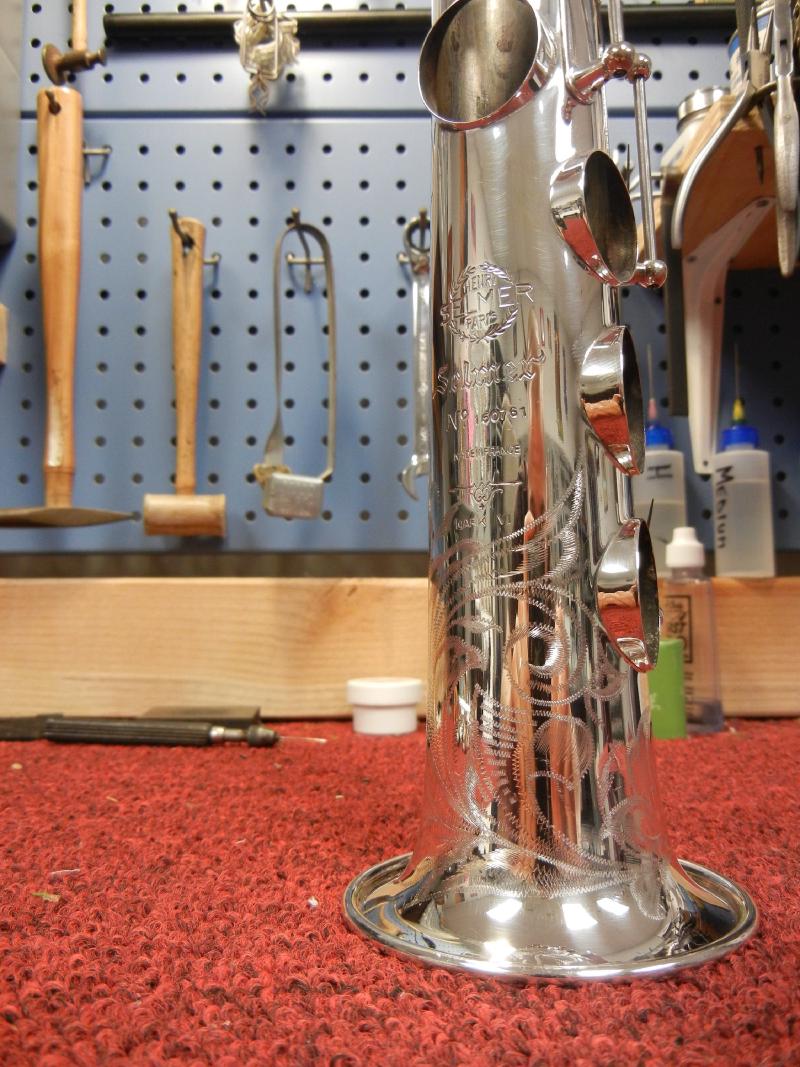
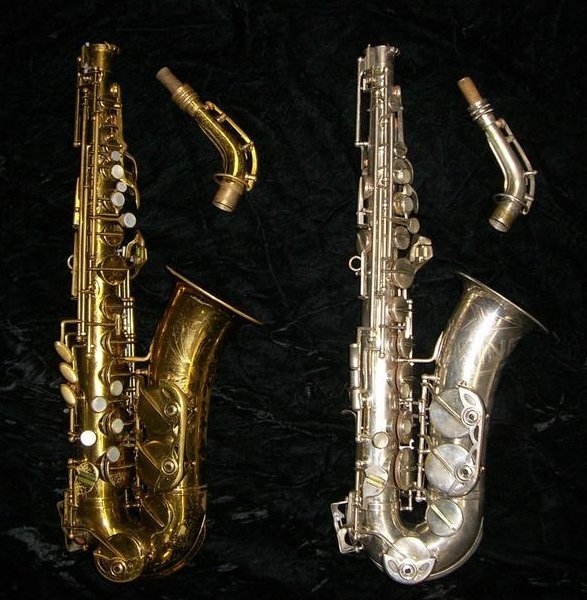
Selmer Mark VI Soprano: American Engraving, Silver Plate

You just don’t see these every day. I am in the mid­dle of clean­ing up this horn, and the sil­ver plate is so bright and thick that if I hadn’t seen it tar­nished and cleaned it up myself I’d won­der if it was excep­tion­ally classy nickel plate. Beau­ti­ful and rare exam­ple of a Mark VI soprano.
Article · May 15, 2011

Why Cheap Saxophones Are Cheap

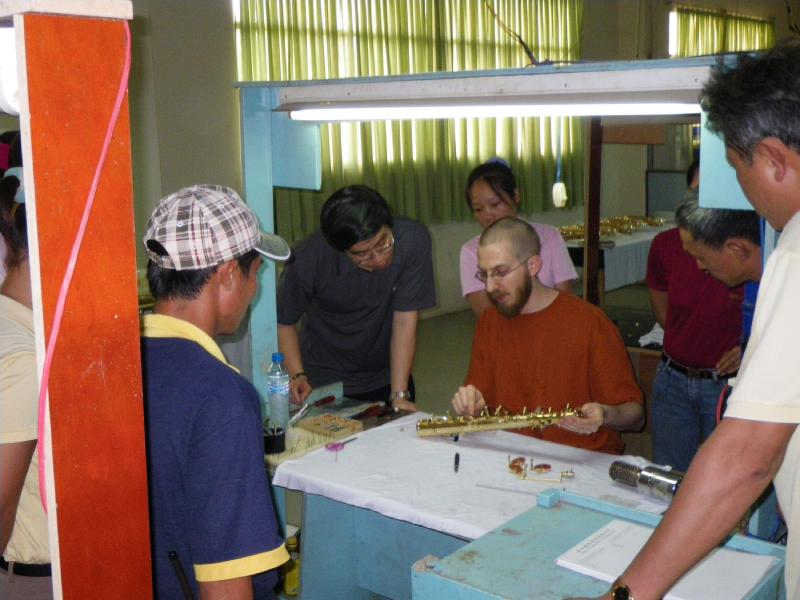
Curt Altarac, a fel­low sax­o­phone repair spe­cial­ist here in North Car­olina put together a great arti­cle at MusicMedic.com based on the expe­ri­ence of one of his appren­tices fit­ting the keys (aka rebuild­ing the mechan­ics) of a cheap East Asian import sax. Any of you who are repair­men read­ing this are imme­di­ately get­ting clammy, and per­haps get­ting cramps in your hands just think­ing about it. And if a for­mer appren­tice of mine is read­ing this– see? I’m not cruel and unusual. Just cruel.
Article · May 15, 2011

The Plastic Saxophone

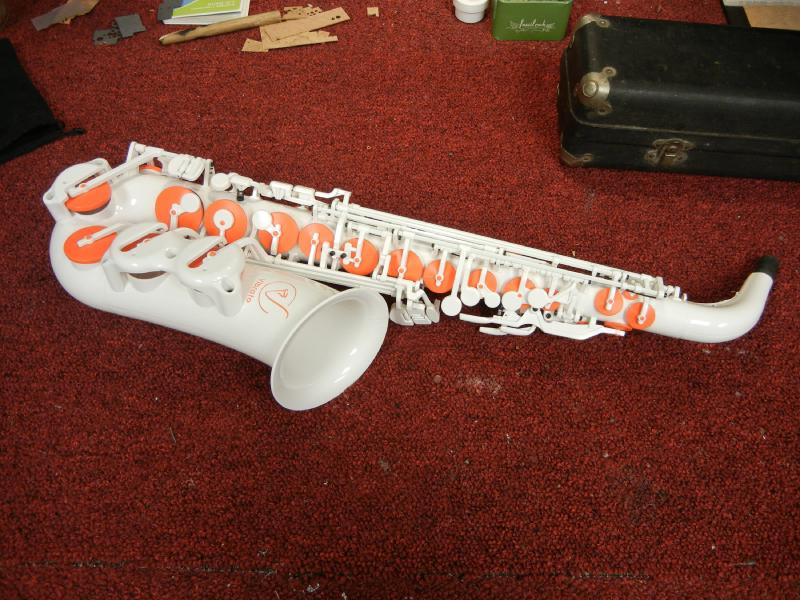
A com­pany based in Thai­land has made a plas­tic sax­o­phone, called the Vibrato. had a chance to test out a Vibrato model A1S and take a look at the mechan­ics from a sax­o­phone repairman’s point of view. (Click on any photo for a high res­o­lu­tion version) In the way­back times, an Eng­lish com­pany made an acrylic sax­o­phone aimed at pro­fes­sion­als called the Grafton . They are frag­ile, rare, and dif­fi­cult– but pos­si­ble– to repair. But when you find one in good shape, they play very well. Char­lie Parker famously played a Grafton for a while.
Article · May 15, 2011

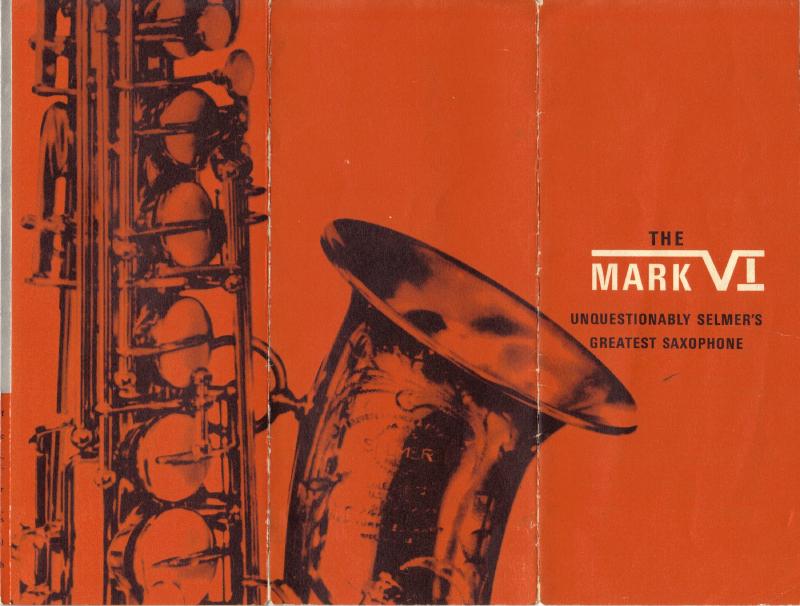
The Original Mark VI Booklets In Their Entirety

I love orig­i­nal lit­er­a­ture, be it ads or book­lets or price lists, and I col­lect them as I come across them. Here are some high-quality scans of the book­lets that would have come with your new Selmer Mark VI sax­o­phone. Click on any image for a high resolution version.
Article · May 15, 2011

The Unprofitable Valley Or: Why So Much Stuff Is Mediocre

Originally written in July 2010, at the ripe old age of 29 The short­com­ings of lan­guage and bar­ri­ers to con­sumer knowl­edge have divorced value from price, and cre­ated an unprof­itable val­ley that traps and kills many good prod­ucts, ser­vices, and inno­va­tions to keep the sta­tus quo a sea of mediocrity. Ever try to find a good mechanic for your car? A good painter for your house? A good repair­man for your sax­o­phone? Chances are that if you have, you have found it dif­fi­cult to find some­one who will do the job right, and price is not always an indi­ca­tor of good quality.
Article · May 15, 2011

On The Forked Eb (aka Eb trill) On Vintage Saxophones

On older horns, sometimes you’ll find that the right hand E pearl is disconnected from the E pad cup, and through a rather complex mechanism is attached to a tiny key opposite the low D. This is a mechanism called the forked Eb, and when in proper working order allows you to trill from D to Eb by raising your middle finger instead of using your pinky on the Eb key.
Article · May 15, 2011

Why is my C, D, E, A stuffy? Why does it have a different tonal color?

** **Obviously some stuffiness is caused by leaks, damage, supoptimal key heights, octave issues (particularly with upper A and C), etc. But what about when you’ve taken it to a competent tech and worked on it and nothing seems to be helping? Well, the following information may help you. Some notes on the horn are vented by one or more open toneholes directly following, some notes are not. The notes that are not, like D, E, A, middle and upper C- have to deal with relatively less venting than those with more than one open tonehole directly following, and this can sometimes affect intonation or the relative stuffyness of the note.
Article · May 15, 2011

My spiel on equipment, setup, and the vintage Selmer thing

** ** The following is an email I received asking a variation of an Eternal Question I seem to get pretty often, followed by my response. “Hello Matt.I am mailing you to tell you about a Keilwerth New King Tenor I have bought and playing. I put it through a repair shop and it plays so well that the Selmer SBA tenor that I own has been sent to the repairers with instructions to try and get it to play as well. the JK is 27xxx serial no .Please can you tell me why this horn plays so well, wen its worth a fraction of the value of the SBA |I whish I had had it from the start.Best Wishes. -xxxx”
Article · May 15, 2011

Early Keilwerth Saxophones

Early Keilwerths I have recently become a big fan of early Keilwerths, around the serial 10xxx to 21xxx. There is a picture of the New King and the Modell 3 I speak about in this article in the gallery. To get up to speed on Keilwerth New King/Tone King and their stencils, go to http://www.saxpics.com/keilwerth/newking.htm and give it a good read. Ok, so now that you’ve read that, I have seen some horns that don’t totally add up with the serial chart Pete has up, although it is a very good general guide. I think the best way you can figure out which horn you have is going to be first by general serial number range, and then (and almost as importantly) what is on the horn itself. I think that the serial ranges may even overlap sometimes, as I have a Tone King with sheet metal keyguards that looks very much like a New King Series I, although it is firmly in the serial range that should be the plastic keyguard model.
Article · May 15, 2011

Otto Link Mouthpieces, Past and Present

Otto Link Mouthpieces, Past and Present This guide was NOT written by me- it has been generously given to me to publish here by MN, and I have it up here with his permission to help anyone who is wanting to learn more about the differences between Otto Link mouthpiece models. Also check out my links section and go to mouthpiecemuseum.com for more information. If you would like to reprint this elsewhere, please contact me first and I will put you in touch with the author.
Article · May 15, 2011

Dolnet "Royal Jazz" Overhaul Report

** ** I recently performed a full overhaul on a Dolnet Royal Jazz alto saxophone in gold plate. The Royal Jazz is the same as a Bel Air model, with the addition of a microtuner on the neck, a high E trill, a forked Eb, a high F# (which on this horn was configured as a fourth palm key), and G# trill key. This particular horn was in satin gold plate with flat gold plating on the keys and engraving, with a protective coat of lacquer, a very rare finish for Dolnets.