Stohrer Music

Latest

The most recent posts, news, articles, and galleries — all in one place.

Article · March 11, 2017

Early 2017 Catch-Up Post

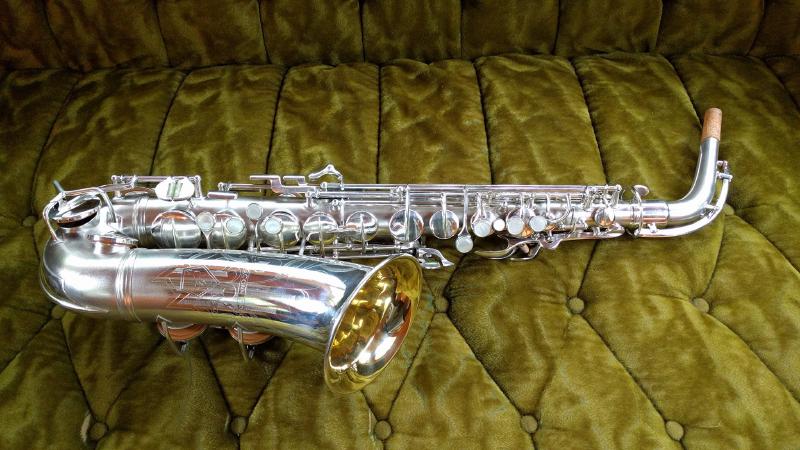
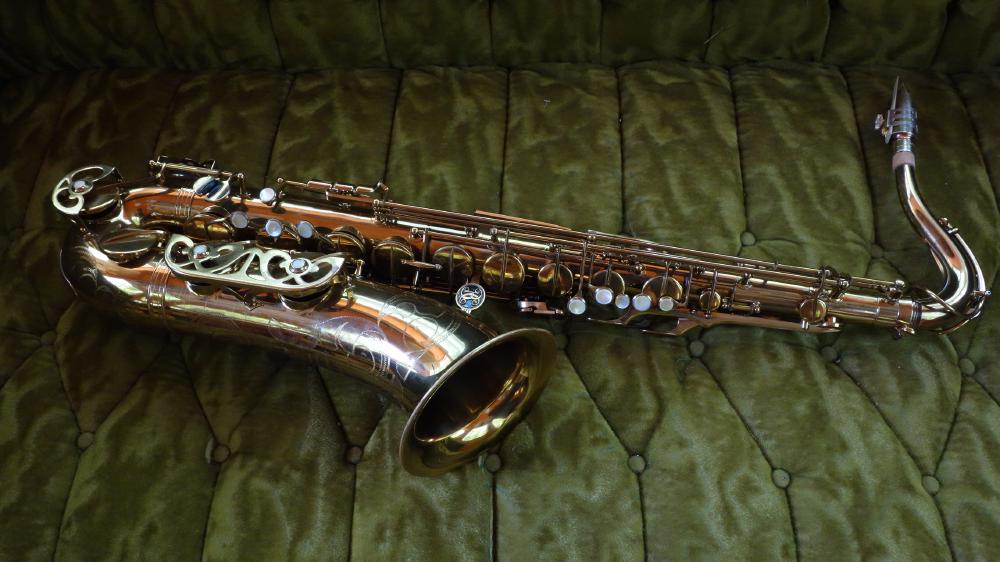
I had a rough patch in my personal life last year (doing better now) and had not put a post here in a while. Here are a few random selections from what has been on my bench in the past few months. Click to enlarge. Nearly immaculate Selmer Radio Improved tenor. This one came to me wearing original pads, which is the first time I have seen that on a Radio Improved.
Article · November 8, 2016

1927 Martin Handcraft Soprano Saxophone, Gold Plate

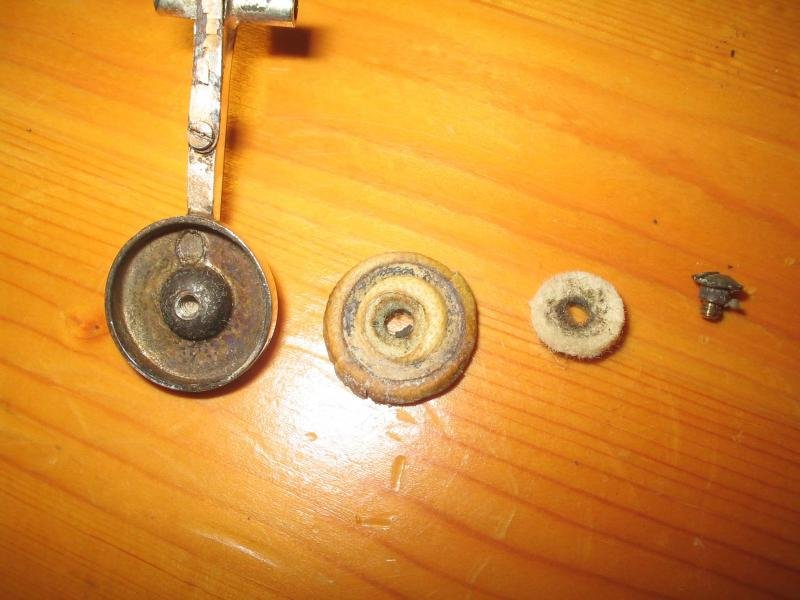
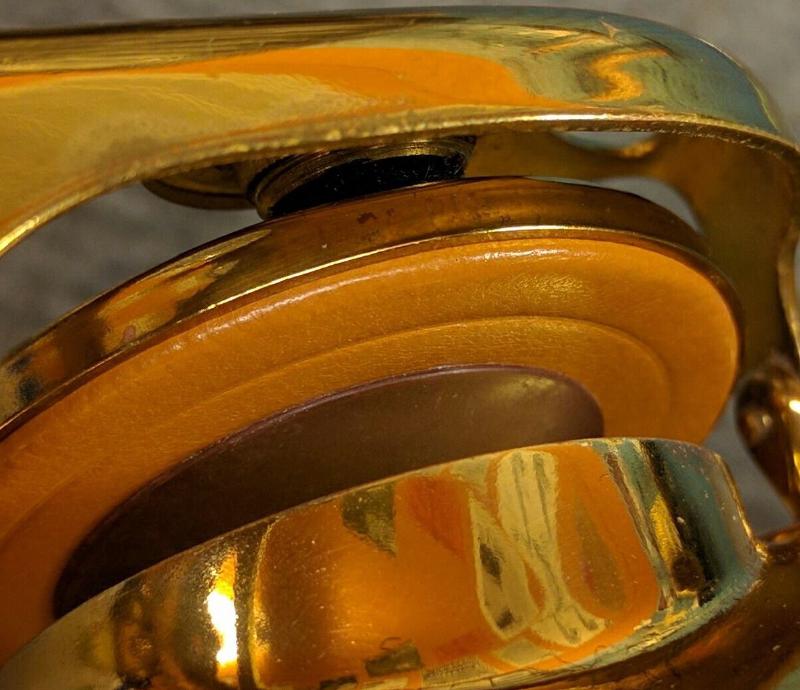
This was a beast of an overhaul. This beautiful gold-plated saxophone originally had the Martin “Neverleek” pad system, which was a gimbaled pad that consisted of a very large dome hard-soldered in the key cup, with a very thin metal-backed pad that was lightly screwed into the dome to allow it to gimbal around to seal on the tonehole. Typically, you would expect that if someone were to install regular pads on a Martin that originally had the Neverleek pad system in it, they would remove the domes first.
Article · September 28, 2016

Nobody Was Here

I strive in my job to be invisible. I figure these instruments will be around for 200-300 years, the guys who designed them were smarter than me, and when in proper operating condition they work extremely well. I try to make them to where the designer could look at it all these years on (most of the instruments I work on are 50-90 years old) and see my restorations and say “yes, exactly, that is how we meant it.". Before the cost-cutting measures, before the rushed assembly line at the factory, there was a perfect ideal of the instrument in the designers head. I want to take it back there. When I’m done, I want it to look like it was born that way. Who did this work? Nobody.
Article · September 14, 2016

I Timed a Saxophone Overhaul

Been working on it for a little while and finally had a horn (the Conn 6M pictured above) that had the perfect situation to allow me to record a baseline overhaul time on a horn that is in excellent condition to start with. I have subtracted the time spent polishing, since that is not “baseline”, as well as smoothed out the numbers here and there to try to make it more “average” by accounting for a few things that went easier than normal, and a few things that took more time than normal.
Article · July 18, 2016

A Possibly Wrong Primer on Engraving

Absent much other information freely available on the web, here is A Possibly Wrong Primer on Musical Instrument Engraving # I say possibly wrong because it is written by myself (introduction) and my partner at the time Bianca (the more helpful bit with tool links), and between the two of us we barely constitute an amateur at the craft/art of musical instrument engraving. So proceed at your own risk. If you do not believe as I do that some information (even if partially wrong) is better than no information, stop reading now and feel free to get upset.
Article · June 9, 2016

Saxophone Hinge Tube Bushing

This is an advanced repair that can be undertaken when a hinge tube in a saxophone (or other similar musical instrument) has been so worn or has so little expose hinge tube that normal swedging will not fix poor key fit. The pictures and text for this article have been graciously provided by Larry Gerhardt of Gerhardt Music in Saint Joseph Missouri. This is a detailed but still rough outline of the procedure, and to undertake this repair you should already be an accomplished repairer with a lot of experience with key fitting- otherwise you will not understand the implied parts that have been left out such as rod making, hinge tube facing, etc.
Article · May 20, 2016

Buffet Super Dynaction Tenor Saxophone

This was a very clean Buffet SDA tenor that sported what some folks call “sparkle lacquer”, although for me the jury is still out on whether that is a real thing or not. (It looks like crazing close up, and I’ve been told by folks who bought theirs new that it developed over a few years after ownership) Either way, this horn is gorgeous, and you can see the sparkley effect on this particular sax in this video:
Article · May 20, 2016

Martin "The Music Man" Committee Tenor Saxophone

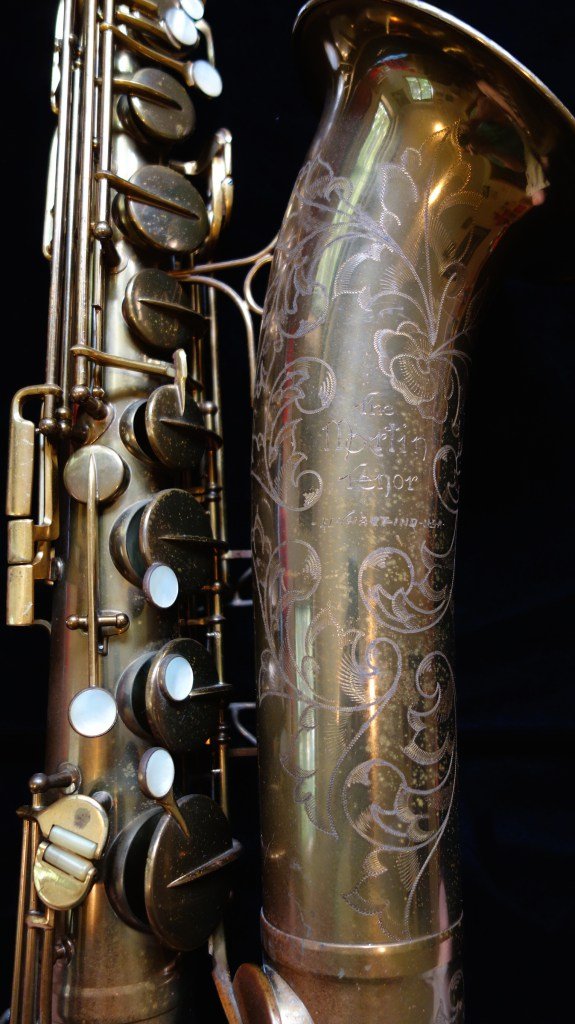
Fairly standard overhaul done on this beauty. I used flat metal resonators. These like thin pads- you’ll be using minimal adhesive as well to get them as thin as the horn wants (assuming key geometry hasn’t been bent all around in the past to accommodate thicker pads). Cool horn. I like the woody tone of “The Martin” saxophones.
Article · May 20, 2016

Solid Sterling Silver Selmer Series III alto saxophone

Solid sterling silver Selmer Series III alto, full mechanical overhaul. This one was a doozy! While it arrived playing decently, it just played dead and stuffy all around, with no clear culprit. In fact, the owner (an extremely accomplished classical player) had been chasing this problem for a couple years, and was growing frustrated that although a lot of money had been poured into the horn, it never played as well as it did when he first bought it. Although I suspected the pads, which were kangaroo skin and in my experience porous and deadening, I advised against an overhaul since I couldn’t guarantee an outcome and it had been relatively recently overhauled elsewhere (with regular checkups since), but despite my grumpiness and overall lack of proper business demeanor, an overhaul was decided upon and performed.
Article · March 11, 2016

Selmer "New Largebore" Soprano Saxophone with Unusual Engraving

This unique horn was made in 1929 during the time period that the “New Largebore” Selmer was being made, but sat unfinished and unsold at the factory until the late 1930s, when it was finished, given a contemporary engraving pattern of the Balanced Action, and sold. Thus the engraving is out-of-time, but completely original. I was instructed to do a job similar to the Balanced Action tenor I did recently- spare no expense and leave no stone unturned mechanically, but try to leave the horn looking and feeling old and “played-in”. Doing so ended up being one of the bigger jobs I’ve done!
Article · March 11, 2016

Selmer Balanced Action Baritone Saxophone, All Original

I actually did very little to this horn- just a few adjustments here and there to improve its playability on its original pads. Yes, you read that right- improve playability on its original pads. And it plays very well. You can tell its a bit leaky, but it plays down to low Bb without much problem and feels pretty good under the fingers. I really enjoy seeing original pads horns because typically there are many layers of work between me and the original master craftsmen that made these things, and a horn like this is when the veil between my world and theirs is thinnest. I am lucky to see original setup horns several times a year, and I have learned an awful lot by spending time with them.
Article · February 19, 2016

Selmer Balanced Action Tenor Saxophone

This is a Selmer Balanced Action tenor saxophone from 1939. This horn had a single owner, a man named Jennings Titus, who bought it new in 1940. Shortly after purchasing, he enlisted in the Army, and he played in military bands all over Europe during World War II. When he flew from place to place, he would send the horn with the officers since there was a lot more room in the officers plane, and he himself would fly with the rest of the enlisted bandsmen. His plane was shot down, but the officer’s plane was unhurt, and he spent the rest of the war in a POW camp while his horn was sent home to his parents. After the war, he reunited with his family and his horn, and played it for the rest of his life. Several years after his death, his daughter brought it to me to fix the old girl up, and I’m happy to say that this ended up being an absolutely beautiful horn that plays every bit as good as it looks. Every once in a while, you come across a Selmer that can give a Conn a run for its money in the big tone department, and this horn happens to be one.

Article · February 12, 2016

Selmer Radio Improved Alto Saxophone, Burnished Gold Plate

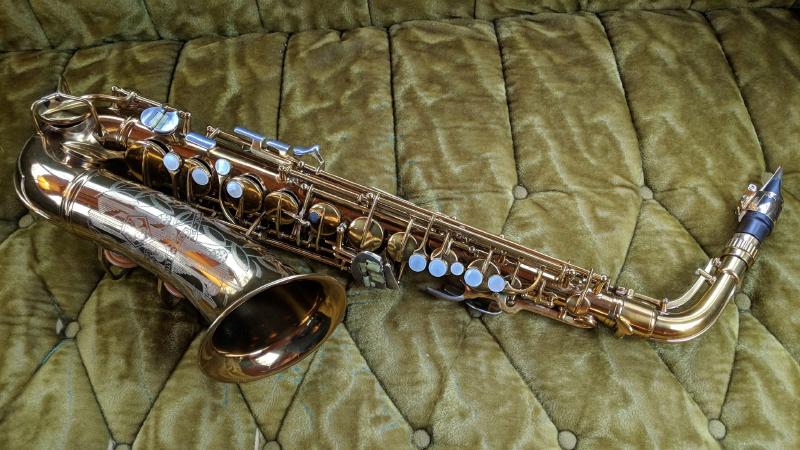
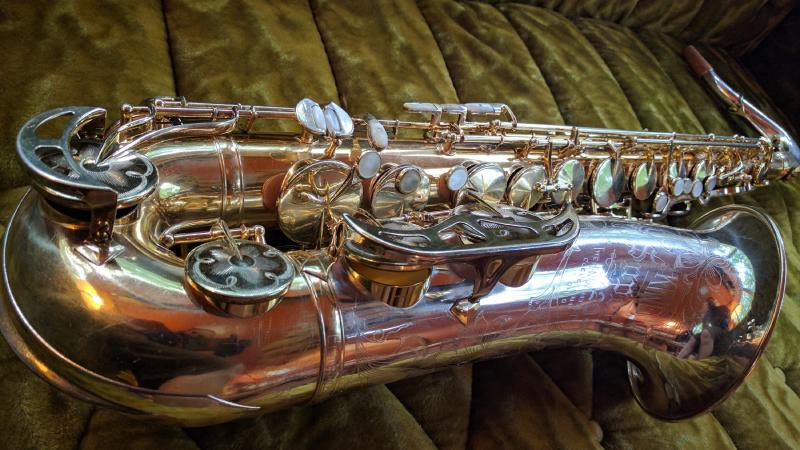
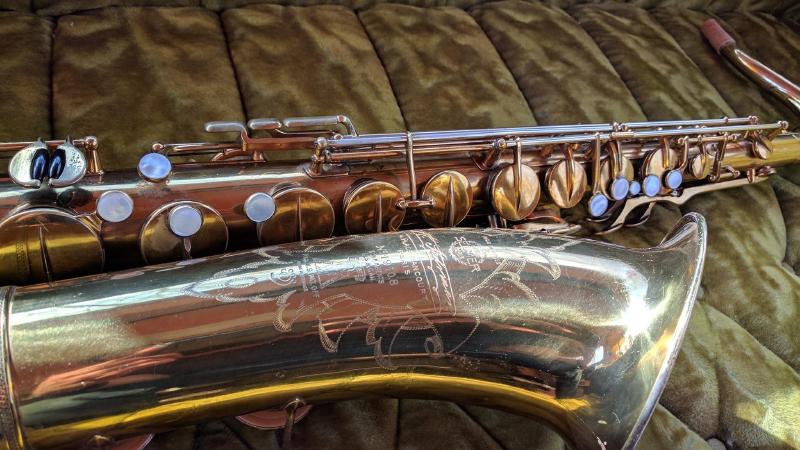
This is a Selmer Radio Improved model alto saxophone in burnished gold plate with the American style engraving. This is one of probably between two and five saxophones of this model ever made with this finish and engraving pattern, and likely the only saxophone with this exact engraving scene as they were typically a little different from one to the next. The burnished finish is different from regular gold plate, and was typically the absolute top-of-the-line finish from any saxophone maker. It involved hours of hand-burnishing (polishing by rubbing it with a very very smooth and hard piece of metal or sometimes a mineral. Pretty interesting stuff, look it up!) and the plating is typically much thicker than a normal gold plate finish.
Article · January 29, 2016

1950 King Super 20 Alto

This horn was for sale here on my website, and was bought and overhauled to the new owners specifications (flat metal resonators, which I like on Kings) and it is now heading to its new home. I did a full mechanical rebuild on this horn, which on a King can be a bit time consuming due to the nickel-silver keywork (which is a harder metal than brass and thus more challenging to refit) and the complexity of said keywork.
Article · January 2, 2016

Evaluating a Used Saxophone for Purchase

This is a video I made, but in case you can’t watch it, I have provided the script below. I ad-libbed quite a few additional things for the video and obviously illustrated the things I talked about, so I would encourage you to watch it if you can, but if not the text below will still be useful to you.
Article · December 30, 2015

How To Install And Seat Saxophone Pads

This article is designed to give you some background on how installing saxophone pads can work. If you are learning repair, this can help teach you how to do it. If you are an interested consumer, this can teach you a bit about why replacing a pad isn’t cheap when its done well and how to understand what you are seeing in your own saxophone. Saxophone padwork is a huge subject, and I am constantly amazed by a few things I notice in my job:
Article · December 17, 2015

Saxophone Part Nomenclature

Note: This article was originally published with photos of each part on a Selmer Balanced Action tenor. The photos were lost during a website migration and I am working on replacing them. The text descriptions remain intact. Naming saxophone parts, like much of the repair business, can differ depending on who is doing it. The guide I have provided here is what I have learned/decided to call the parts, and may be different from what you like to use or have heard used. But since there doesn’t seem to be a reliable and agreed-upon standard publicly posted elsewhere that is widely known, I’ll just put this here and maybe folks will use it.
Article · December 17, 2015

The Disclaimer

As I am fond of saying, there are almost as many ways to do this job right as there are to do it wrong. Use this information wisely. Do not learn repairs on a great saxophone. The great saxophones of today and in particular yesteryear are singular and irreplaceable, and properly cared for will last for 200-300 years. This means they belong mostly to future generations, since the majority of their useful life lays ahead of them. We are **stewards **of these instruments, not owners, and you owe it to the future generations yet to come to err on the side of preservation, always.
Article · December 17, 2015

Saxophones On Which To Learn Repair

First things first: DO NOT LEARN TO REPAIR ON A GREAT SAXOPHONE. The great saxophones of today and in particular yesteryear are singular and irreplaceable, and properly cared for will last for 200-300 years. This means they belong mostly to future generations, since the majority of their useful life lays ahead of them. We are stewards of these instruments, not owners, and you owe it to the future generations yet to come to err on the side of preservation, always.