Stohrer Music

Latest

The most recent posts, news, articles, and galleries — all in one place.

Article · August 14, 2012

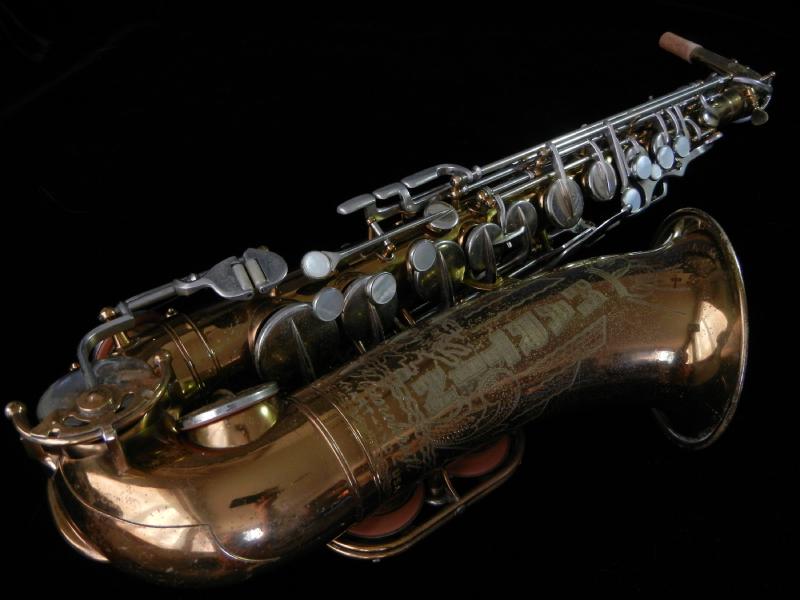
Vito "Duke" alto saxophone, handmade by Beaugnier in France

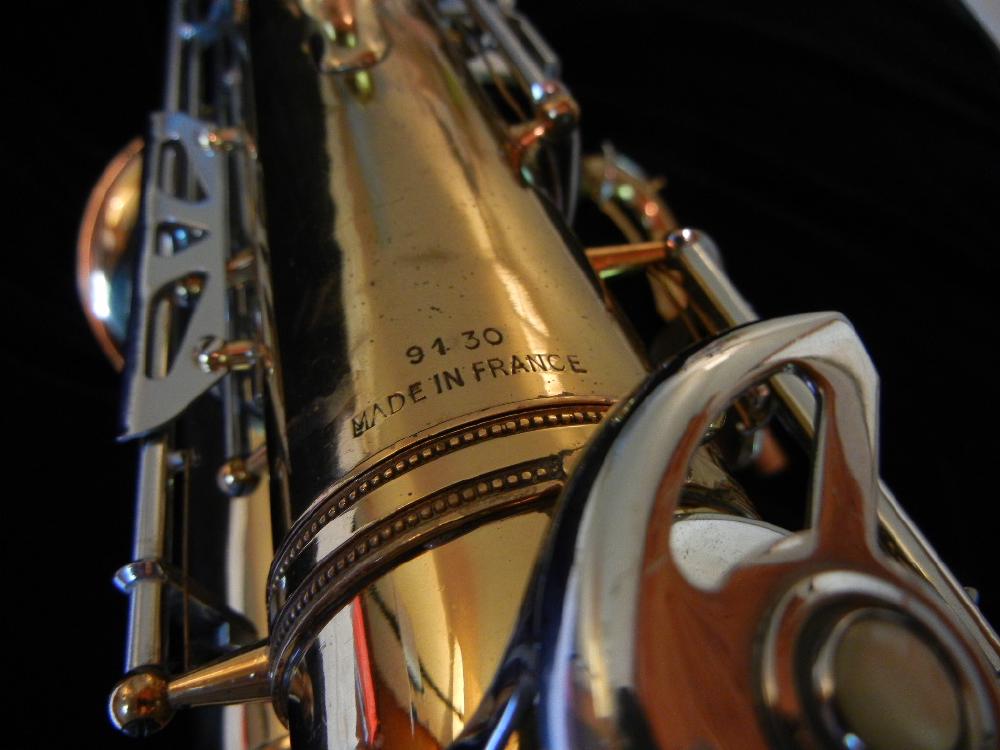
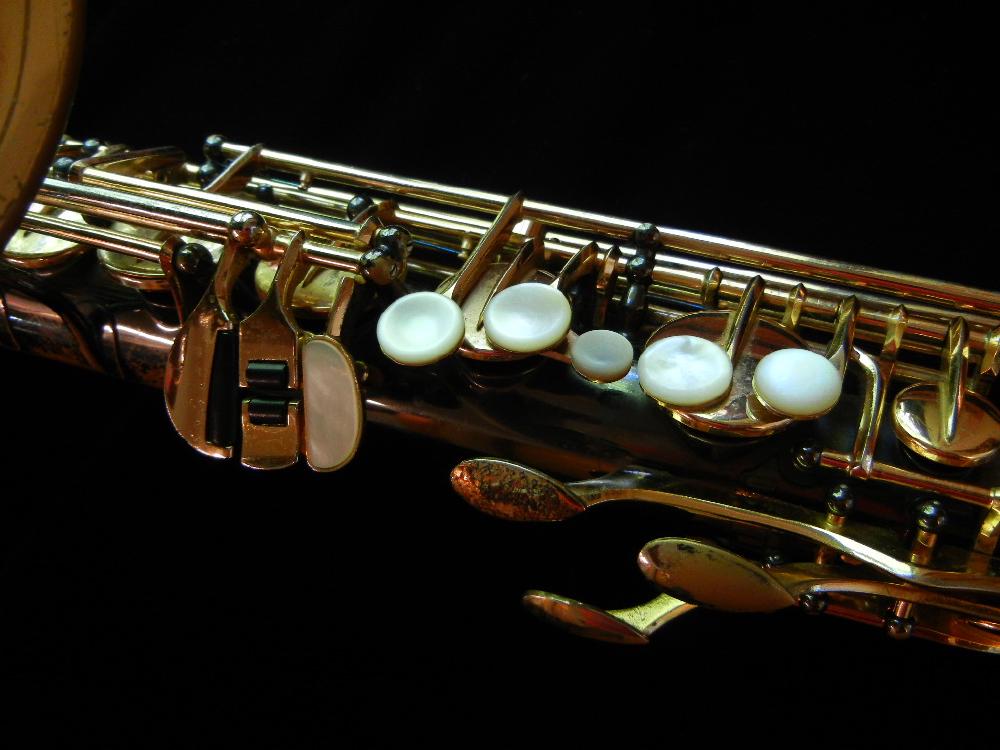
SOLD This one was supposed to be for my personal collection to match my Vito “Duke” baritone, but my eyes were a bit bigger than my wallet. I am loath to give it up! But without further ado… This is a Beaugnier-made Vito “Duke” alto saxophone in good original condition with original lacquer and even with its original Leblanc case. The Vito “Duke” is one of the last horns Beaugnier made, and they are excellent saxophones through and through with a wide-open tonality that can blow the walls down. Construction is excellent, ergonomics are very friendly (though if you have large sausagelike fingers, the left hand pinky table may be too small for you), intonation is good, and did I mention the tone?
Article · August 14, 2012

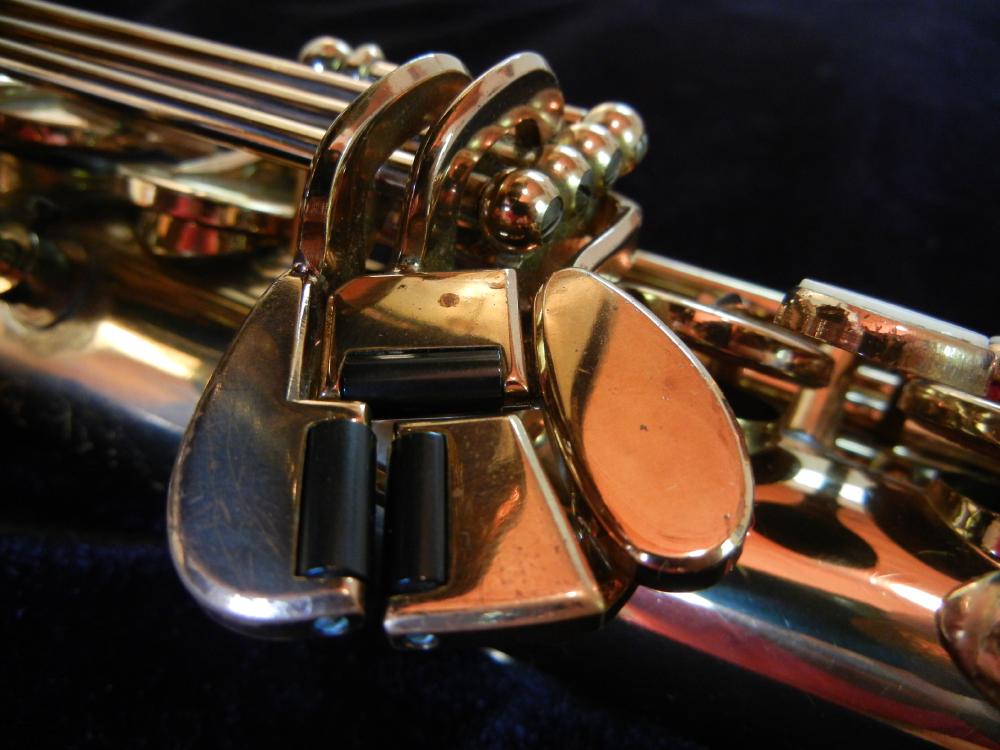
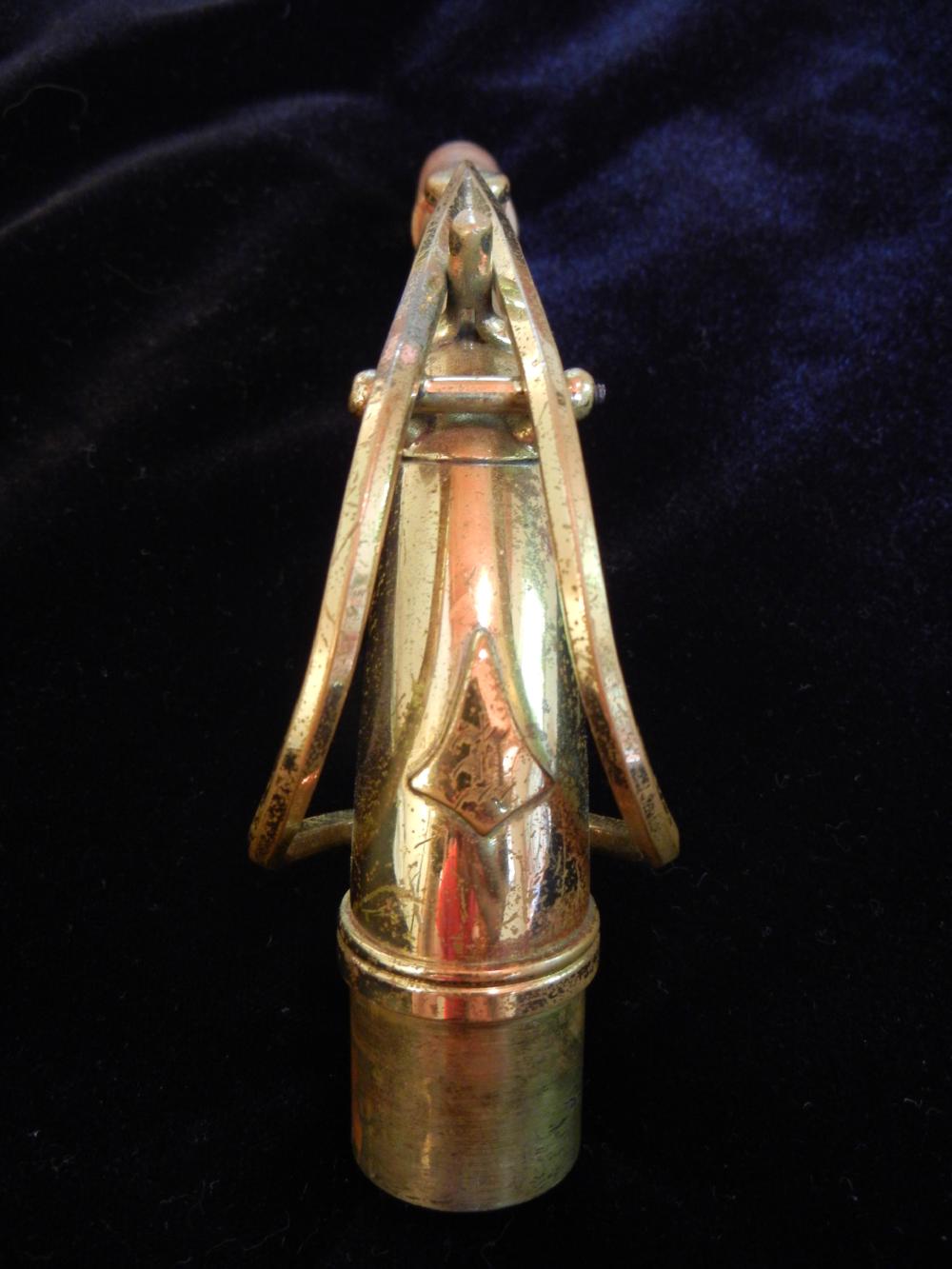
Holton 232 Alto Saxophone (sleeper handmade in USA pro horn!)

SOLD! This is a post-war but pre-buyout Holton 232 alto saxophone, a professional model that is identical to the Holton 234 “Stratodyne” (which was their absolute top-of-the-line and the best horn they ever made) with the exception of some aesthetic differences (engraving, key guards) and the design of the octave mechanism. The bore is the same as the Stratodyne, and just like the Stratodyne, under the fingers it is a comfortable horn, intonation is good, build quality is very good, and the tone is great- fat and full and rich.
Article · June 19, 2012

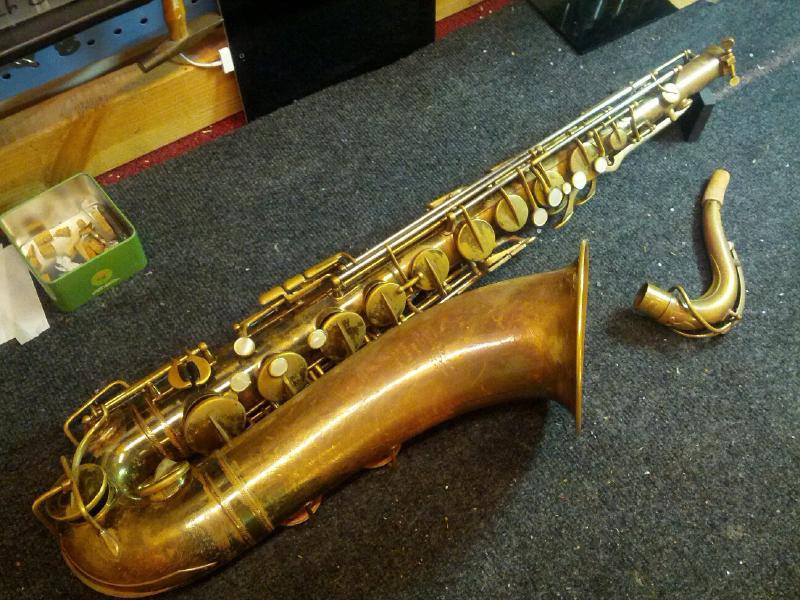
Late 1950s Noblet (Beaugnier) Tenor Saxophone, Handmade in France

SOLD Looking for a vintage hand-made French tenor saxophone in excellent and unmolested physical condition? One with a fresh top-shelf overhaul by a top-tier saxophone specialist who knows and loves them? Would you like it to have good intonation, ergonomics that won’t break your fingers, excellent quality construction, a powerful and bottomless tone that will put most other saxophones to shame? One that will only appreciate in value as time goes on? Oh and how about all of that for $2200?
Article · June 2, 2012

Collectors Condition Conn Transitional Alto Saxophone with Original Warranty

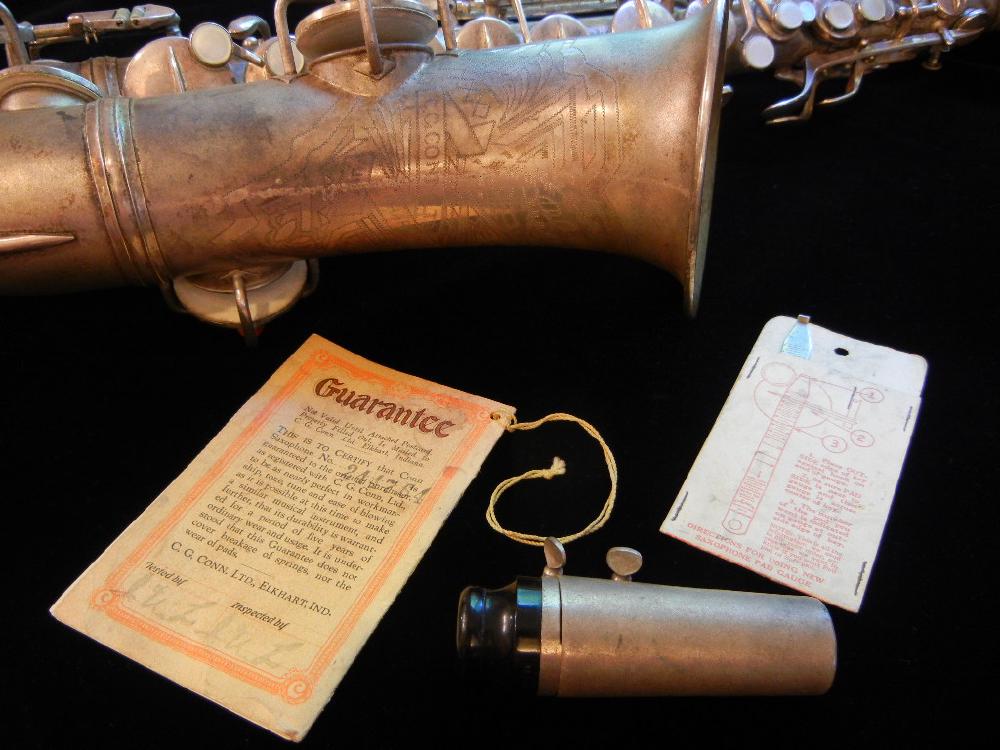
SOLD Well here is a pretty amazing find. This is a very early Conn 6M transitional alto saxophone with original case, original mouthpiece, original neck strap, original lyre holder, and original warranty booklet. It has never been overhauled, and still sports its original pads from its manufacture in 1931. This is an exceptionally rare find in my experience for a Conn, and before now I have only seen one other horn with its original warranty booklet. That makes this horn a saxophone that will play great, look beautiful once I overhaul it before sale, and be a good collector’s investment.
Article · June 2, 2012

Conn Transitional 6M Alto Saxophone

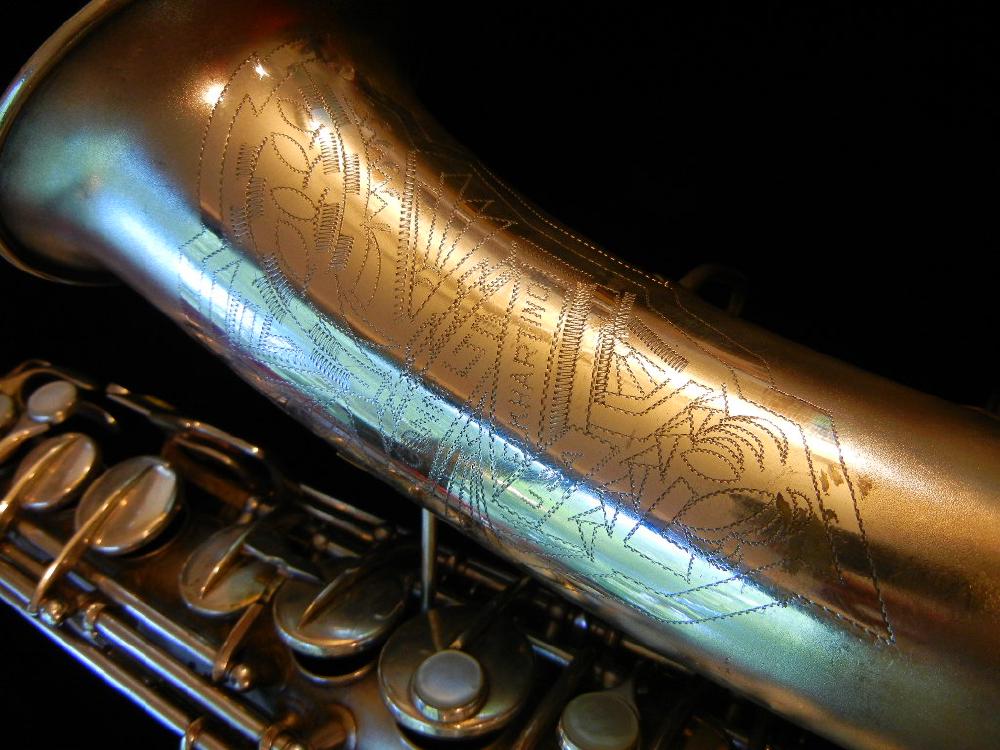
SOLD! Here is what it looked like after it was done: This saxophone is pictured prior to overhaul- unpolished! It will be overhauled prior to sale and will look nearly new. This is a mid-period Conn 6M transitional alto saxophone from 1932. It features 6M-style upper and lower stack keys, Eb/C cluster, palm keys, side keys, octave mechanism, and underslung double-socket neck. It has a rather rare variant of the LH pinky table- 6M style linkages with left hand bell keys, but a New Wonder Series II style pinky table- although slightly tweaked from the New Wonder Series II. And of course it has the transitional-only feature of the swivel thumbrest. This saxophone features the art-deco style engraving, which is a beautiful design only seen for a few years during the transitional run.
Article · June 2, 2012

Couf Superba I Tenor Saxophone in Black Nickel

SOLD This is a rather more rare variant of an excellent saxophone, the Couf Superba I. The Couf Superba I was made by Keilwerth, and is the predecessor to the SX90R series of saxophones which are still sold today (in fact, I am a Keilwerth dealer, so if you want a modern one, I can do that too!). This is a professional model saxophone, featuring rolled toneholes, a wide bow and large bell, high F# key, and black nickel plate finish. The ergonomics are very good with oversized pearls, intonation is good, and the tone is warm, lush, and ballsy. Great horn for jazz, R&B, rock, gospel, soul… the list goes on. These are excellent saxophones, and I am a fan of them.
Article · May 24, 2012

Finding an Audience for Jazz

“Jazz simply needs to continue doing what made it great in the first place: engage with popular culture in an intelligent, nuanced and sophisticated manner, as some successful groups are doing today. If there is any hope of audience building, this is where it lies. It must be organic, visceral and culturally relevant, qualities which cannot be consciously conjured by an audience development committee.” NPR Jazz has a thought-provoking blog post by Kurt Ellenberger titled “It Can’t Be Done”: The Difficulty of Growing a Jazz Audience where he makes the point that in many places, the very language we use to define the “problem” of modern jazz is what prevents us from finding the answer.
Article · May 6, 2012

Yamaha "Purple Logo" 62 Alto Saxophone

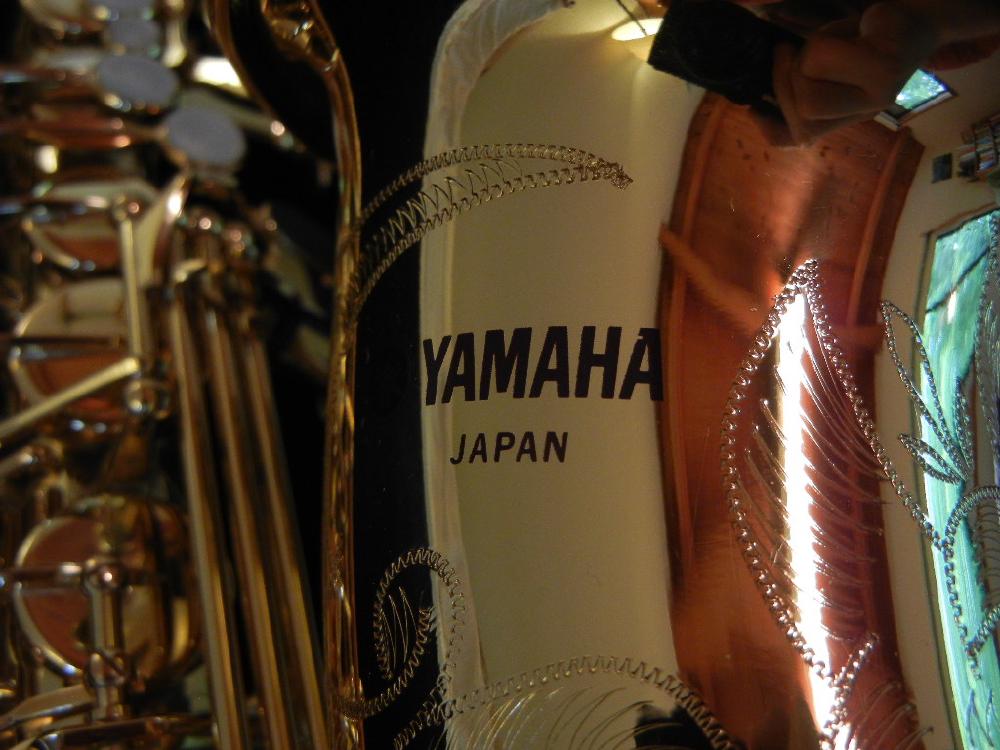
SOLD This is an excellent original condition Yamaha “Purple Logo” YAS-62 alto saxophone. It comes in its original case, and will be overhauled before sale- and if you catch me before I do the overhaul, it can be done to your specifications. The “Purple Logo” series YAS-62 was made from the late 1970s until the early 90s, was Yamaha’s top of the line model at that time, and is different in both feel and tone and construction to the modern version of the YAS-62. It possesses all of the best qualities one is looking for in a modern saxophone- excellent Yamaha quality construction, modern ergonomics, excellent intonation- with the fullness and richness of tone you associate with a vintage horn. Modern Yamahas are excellent saxophones to be sure, but their tone can be too clear and pure for some folks (yours truly included). This sax is a different breed of Yamaha, and represents (alongside the Yanagisawa 880) one of the best values in the saxophone world today if you are looking for modern ergonomics. It truly is the best of both worlds- rich vintage tone with modern ergonomics and scale, and craftsmanship that is hard to beat.
Article · March 1, 2012

A Short History of Amati Saxophones by Dennis Gazarek

This 2008 article has been reprinted in whole with the permission of its author, Dennis Gazarek. The opinions in this article are the author’s and I reprint it here without any edits. -Matt AMATI Saxophone: A Short History by Dennis Gazarek # The history of saxophones and other instruments produced by the predecessors of Amati-Denak is complex, confusing and convoluted. The instrument makers were directly impacted by European wars of the Twentieth Century, Nazi and Soviet expansionism and the Cold War. My goal is to provide some insight in the evolution and revolutions that have taken place to result in the Amati-Denak company of today. I will leave it to some scholar in the future to write the definitive history, with names, details and facts that I have not included in this short summary. I admit my Czech-Canadian heritage and that I am a bit of a ‘shill’ for the Amati brand. I do believe that Amati’s line of saxophones and instruments deserve a fair consideration from Canadian and American consumers.
Article · February 21, 2012

Saxophone Adjustment Materials: The Stohrer Method

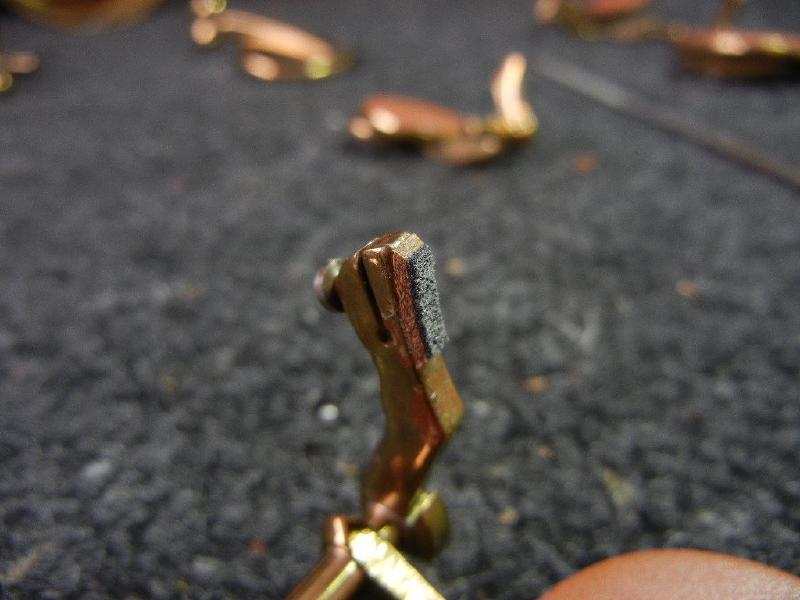
Saxophone Adjustment Materials by **Matt Stohrer ** Everybody knows about pads, everyone has an opinion on resonators or whether plating makes you sound better, and you can google your way through most of a simple DIY saxophone overhaul or at least with enough time spent begin to understand why your horn does what it does- but there is a hole in the saxophone repair body of knowledge when it comes to detailed information about adjustment materials. The adjustment materials are the corks and felts, the synthetic felt and leather and teflon and ultrasuede and synthetic cork and shrink tubing and sorbothane and the dozens of other materials repairmen use on your saxophone to make it work. Adjustment materials are what make keys work together with precision, what allows you to play an instrument with more keys than you have fingers. Adjustment materials are also what control the heights of the keys and therefore influence intonation and response, and also keep the complicated metal machinery of a saxophone operating smoothly in silence. These materials are not just an afterthought- **in fact they are integral to having your saxophone feel good under the fingers, seal well over a long period of time, have smooth and even action, and keep the keywork studio-quiet. **
Article · February 20, 2012

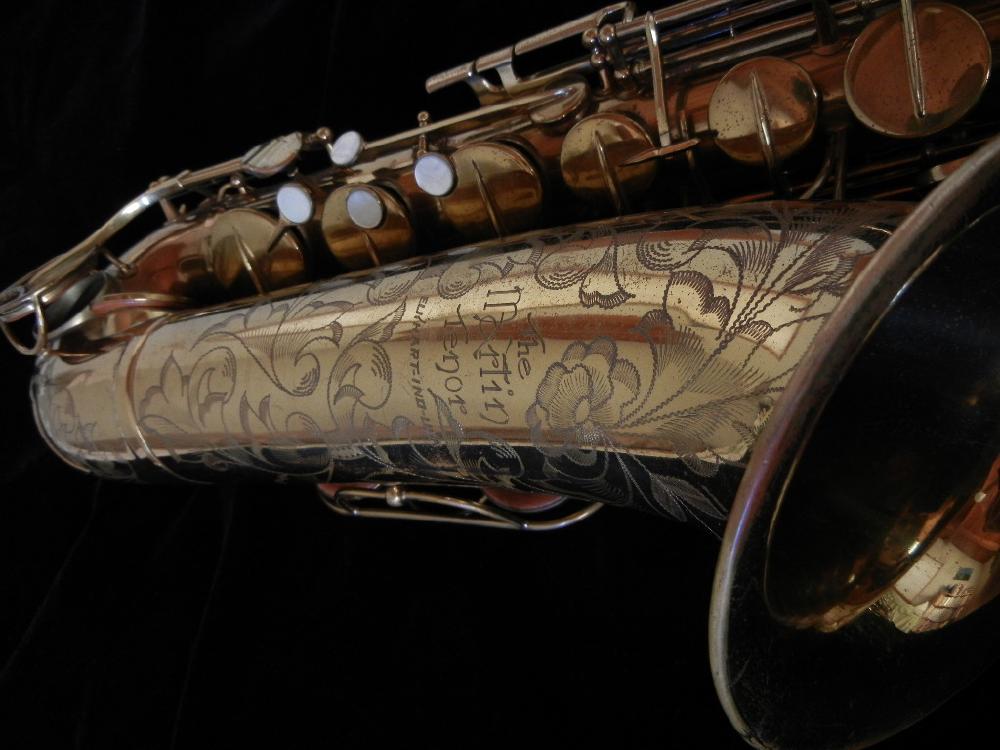
The Beauty of Saxophones: 1938 Martin Handcraft Committee II

This is an all-original survivor, a rarity among Martins from this period whose notoriously delicate lacquer has survived nearly completely intact after 74 years. Most often when you see nickel keywork on a lacquered body, you think student intstrument. But it was not always so- indeed the nickel (or sometimes plated silver) keywork against lacquer was a premium option in the first half of the 20th century and it was only later that it was co-opted (most likely for nickel’s durability) for student instruments such as the original Bundy, the King Cleveland, and so forth (though now days these instruments are more like intermediate horns compared to what a modern student instrument is).
Article · February 12, 2012

Interesting Selmer Information from Jerome Selmer

I attended a clinic where the Director General and head of Research and Development of Selmer (Paris) Jerome Selmer gave a historical presentation and graciously and patiently answered questions from the audience of saxophone repairmen (and one Taiwan-based competitor) for nearly two hours. Some interesting things he mentioned: The Mark VI and Reference horns are 66/34 alloy brass (note: common trade name for this alloy is “yellow brass”) The S80 is 70/30 alloy brass (note: common trade name for this alloy is “cartridge brass”) The S80II and Reference horns share body tubes and bows, but have different necks and bells The S80III differs from the S80II in neck and upper body taper (as well as some tonehole placement), bell and bow are the same The Jubilee horns have toneholes that are .2mm taller (about .007 inches, or the thickness of an 3x5 index card) The bells on most horns (except special editions and baritone/bass) are not hand hammered anymore because the workers kept getting wrist injuries Toneholes are made by mounting the body on a mandrel and cutting the hole by CNC machine, but the toneholes are pulled with a mechanical device controlled by a worker The body and neck seams used to be brazed, now they are welded The necks are straight cones, filled with ice and bent by hand (I would have expected hydroforming! I was surprised to hear this, and I am kind of blown away it is just a straight cone) They may eventually move to machine engraving, and a few S80 horns are already in circulation that have early experiments with machine engraving Until the 1970s, none of the knowledge on how to build was written down- it was all in the heads of the workers, and passed on from one generation to the next The R&D department is already working on the next Selmer model- and the eventual goal is to have one model of saxophone across the board (like back in the day) The R&D department is working on an acoustic reference blueprint of “the Selmer sound”- a waveform they can strive for when designing new horns The R&D department has the top technicians in the company and can prototype a new instrument in about 15 days
Gallery · January 28, 2012

Vintage Emblems

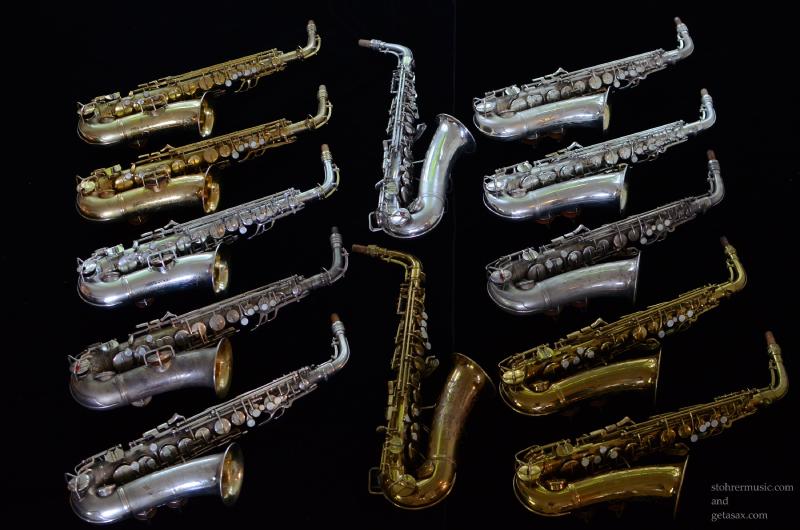
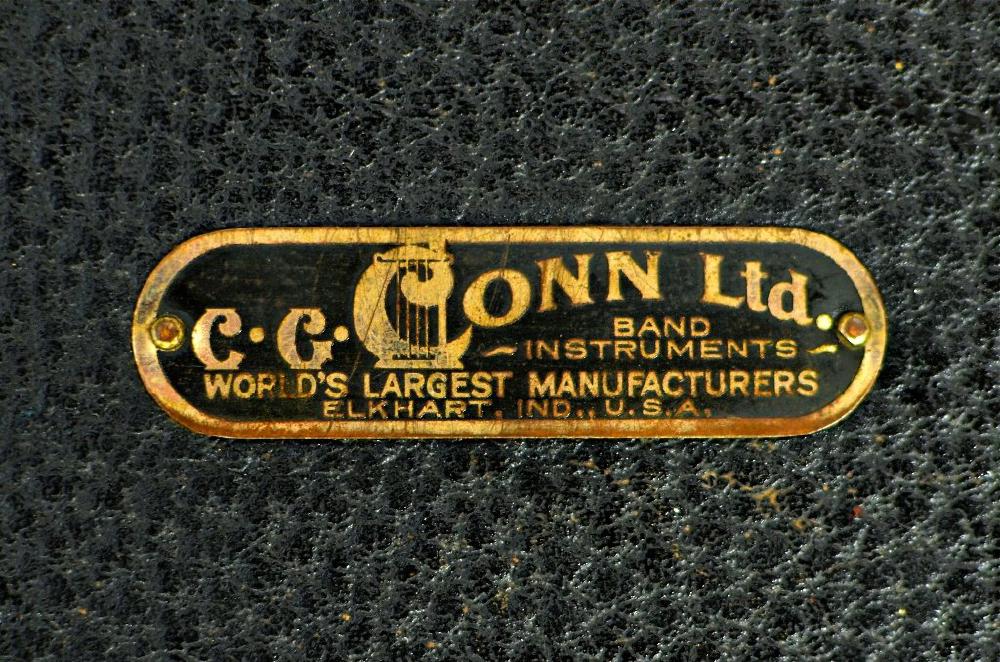
A joint project with Brian from GetASax.com showcasing the manufacturer emblems from vintage saxophone cases.
Article · January 28, 2012

1951 Martin "The Martin" Committee III Tenor Saxophone, All Original

SOLD This is a one-owner 1951 Martin Committee III tenor in excellent shape, with original lacquer at 95%, original case, serial-matched neck, no dents or resolders, action is tight, original end plug. This saxophone came to me with its original pads and is getting its first-ever overhaul for sale. Even the original lyre holder- the first I have ever seen on a Martin Committee III- is in the (original) tri-pack case. This horn was obviously loved by its owner and well taken care of, and soon will be making music again, and should continue making music for decades to come.
Article · January 24, 2012

Kohlert Winnenden Tenor

I recently overhauled a 1954 Kohlert “Winnenden” tenor saxophone and was impressed with its tone, ergonomics, intonation, and construction- which features rolled toneholes and relatively modern ergonomics. The tone is dark, woody, and full- and tons of fun to play with a really dig-deep cupboard-rattling capability. Repair-wise, the design of the horn presented no special challenges- if you can repair a Leblanc or a Conn well (which is unfortunately not as common as it should be), you are fully capable of overhauling one of these. If you only do modern horns and Selmers, be prepared to spend a little extra time figuring out what the builders of this instrument meant for you to do! Construction is single post, rolled toneholes, large and very slightly concave pearls. Front F, non-automatic G# (G# is not activated by the rest of the pinky table), left hand bell keys. The original pads (see pictures below) seem to have been very similar to a Conn Res-O-Pad, except with a large rivet in the center instead of a flat washer resonator/rivet combination. I overhauled this with regular pads and flat metal resonators and I am very pleased with the results.
Article · January 23, 2012

Low C# Stiff on a Conn 10M

This is something I posted in a forum a little while ago. The question was “My low C# is stiff on my Conn 10M. What springs do I adjust to make it better?” As is often the case with good saxophone repair, the answer lies deeper and the knowledge required is greater than you might think. Here was my reply: “The difference in necessary spring tension for a mechanism with bad adjustment materials and lost motion to a mechanism that is perfectly tight, perfectly fit, slick and free is enormous. Start there, work your way backwards to the springs.
Article · January 16, 2012

RARE Keilwerth New King Series II Alto Saxophone

SOLD Now here is a really rare saxophone. This is a Keilwerth New King Series II alto saxophone- one of only about 500 ever produced, and the only Keilwerth horns ever to have soldered and beveled toneholes (like a Martin). Not much is known about these saxophones, except that they were produced only for a very short time after Keilwerth moved from Czechoslovakia to Germany after World War II. Rumor has it these are exceptional instruments, and they rarely show up for sale, and even rarer still in good condition.
Article · January 16, 2012

Yamaha "Purple Logo" YTS-62 Tenor Saxophone

ON HOLD - SALE PENDING! The Yamaha “Purple Logo” saxophones represent a fantastic value in saxophones: modern ergonomics and intonation, warm and full vintage-y tone, and prices lower than either a new horn or most vintage saxophones. It is a combination that is hard to beat, and people who have played one will tell you its a horn that is undervalued. This tenor was built in the 1980s, and has held up very well. Physically it is straight with no dents, lacquer has scratches but is fully intact. This saxophone is presently undergoing a full repad where it will get disassembled, cleaned, toneholes checked and perfected, and all new pads with flat seamless metal resonators in it for a fat and warm sound.
News · January 13, 2012

Stohrer Music News, January 2012

My news updates are infrequent enough I have forgotten which volume I am on, so January 2012 it is. This update is actually taken in major part from a very kind thread about me under “dealer evaluations” on Saxontheweb. So, it’s 2012. I’m insanely lucky enough to be fairly booked for repairs for this whole upcoming year (with the exceptions of locals and previous clients, whom I will always make time for), and I’m going to be spending all of my extra time this year focusing on adding products to my website. I am currently a P. Mauriat, BAM, and Protec dealer, and I hope to also add several more product lines this year- in addition to more vintage mouthpieces and horns. One that I am excited about and working on is possibly becoming a Keilwerth dealer (cross you fingers for me!)- which would get my same new saxophone setup included in the price- and maybe some mouthpiece lines as well. Since I am a small-time one-man type of deal, and I am doing all of this on my own with no loans, progress is slow but sure. In fact, the way I’ve got it set up, my repair services put food on the table, and 100% of my sales of cases, horns, mouthpieces etc. is reinvested into more products- and in some cases like my upcoming machining class this spring into knowledge I can directly put to use in your service.
News · November 24, 2011

Thanksgiving 2011

I am thankful for so much this year. My amazing wife as ever, a new place to live in the country like we’ve dreamed about, a garage, a thriving business, cool and friendly new neighbors, a reliable car, an incoming son, and of course all of you- my friends and my customers who put warmth in my heart and food on my dinner table. Thank you and have a happy Thanksgiving.